Fertility Lubricant Guide: What to Look For When Trying to Conceive


Fertility Lubricant Guide: What to Look For When Trying to Conceive
If you're trying to conceive (TTC), every decision you make in the bedroom matters more than you might think — including the lubricant you use. A fertility lubricant is not a luxury; it's a necessity for many couples navigating dryness, stress, or the physical demands of timed intercourse. But not all lubricants are created equal. In fact, many mainstream lubricants actively harm sperm, reducing your chances of conception with every use.
This guide breaks down exactly what makes a fertility lubricant safe — and effective — when you're trying to get pregnant. We'll walk through pH levels, osmolality, sperm motility data, and the specific ingredients checklist that separates a genuine conception lubricant from a product that simply markets itself as one.
Whether you're new to TTC or deep into your fertility journey, understanding what your fertility lubricant does (or doesn't do) for sperm survival could make a meaningful difference in your timeline.
Why Most Lubricants Are Harmful When Trying to Conceive
Conventional lubricants — even water-based ones — can be devastating to sperm. A landmark study published in the journal Fertility and Sterility found that common personal lubricants including KY Jelly, Astroglide, and others significantly reduced sperm motility within just 30 minutes of exposure. Some products reduced motility by more than 60%.
The culprits are multiple and often hidden in the ingredient list:
- pH imbalance: The vaginal environment during fertile days sits around pH 7.0–8.5, and sperm thrive in this range. Most commercial lubricants have a pH between 4.0 and 5.0 — acidic enough to slow or kill sperm on contact.
- Hyperosmolality: Osmolality refers to the concentration of solutes in a solution. Standard lubricants are often hyperosmolar, meaning they draw water out of sperm cells, causing them to shrivel and lose motility. The WHO recommends lubricants for TTC sit between 200–380 mOsm/kg.
- Glycerin and propylene glycol: Common humectants that create a sticky texture but are toxic to sperm at certain concentrations.
- Parabens and preservatives: Antimicrobial preservatives that also disrupt sperm function.
The solution is a fertility lubricant specifically formulated to mimic the natural conditions sperm need to survive, swim, and reach the egg.
The Key Criteria: What a Fertility Lubricant Must Meet
Trusted by couples worldwide, Conceive Plus offers a complete range of fertility supplements and lubricants — formulated by fertility specialists.
Explore Conceive Plus Products →
A genuine fertility lubricant or sperm friendly lubricant must meet rigorous scientific criteria. Here's the checklist every TTC couple should know:
1. pH-Balanced for Sperm Survival (7.0–8.5)
The cervical mucus during ovulation naturally rises to a pH of approximately 7.0–8.5, creating a hospitable environment for sperm. A fertility lubricant must match this pH to avoid shocking sperm upon contact. Anything below pH 6.0 is hostile territory.
2. Isotonic or Near-Isotonic Osmolality
The lubricant should be iso-osmolar with semen (approximately 280–380 mOsm/kg) to prevent osmotic damage to the sperm membrane. Studies show hyperosmolar lubricants cause cell dehydration and motility loss within minutes.
3. Calcium and Magnesium Ions
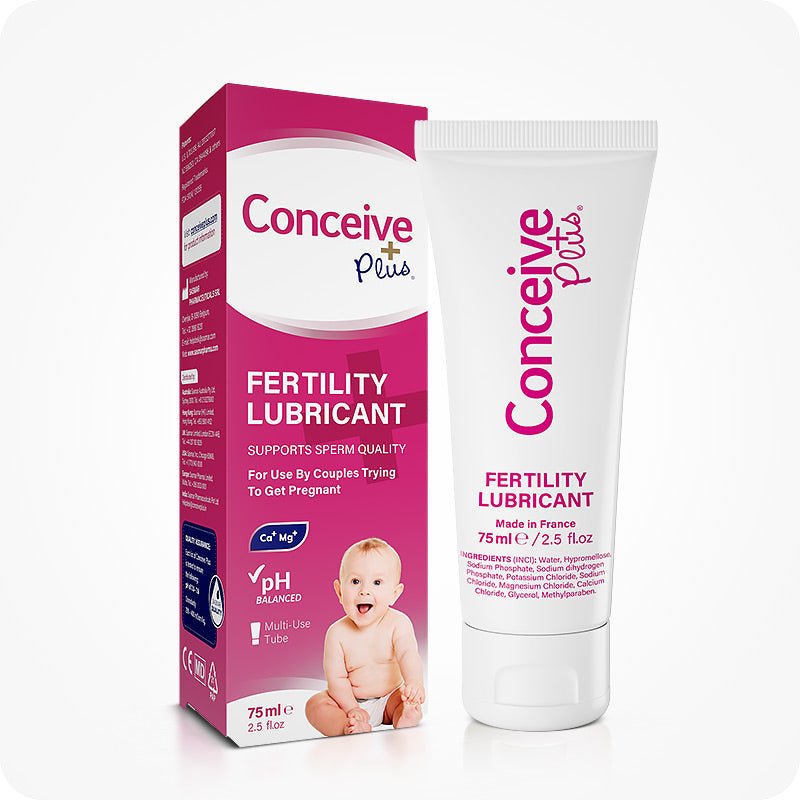
This is where leading fertility lubricants pull ahead. Calcium (Ca²⁺) and magnesium (Mg²⁺) ions are essential cofactors in sperm capacitation — the process by which sperm gain the ability to fertilise an egg. Only a handful of lubricants on the market actually include these ions. Conceive Plus is uniquely formulated with both Ca²⁺ and Mg²⁺ to support this crucial biological step.
4. No Glycerin, Parabens, or Spermicidal Agents
A conception lubricant must be free of ingredients known to harm sperm. Glycerin is fermented by vaginal bacteria and can alter vaginal pH; parabens are endocrine disruptors; and any product containing nonoxynol-9 (a common spermicide) is an absolute non-starter for TTC.
5. FDA-Cleared / CE-Marked for Fertility Use
Regulatory clearance as a medical device (not just a cosmetic) signals that the product has undergone testing to confirm it does not impair sperm motility or function. This is a critical distinction that many lubricant brands skip entirely.
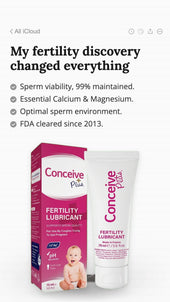
Conceive Plus Fertility Lubricant is FDA-cleared, pH-balanced, and uniquely formulated with calcium and magnesium ions to support sperm survival and capacitation.
Shop Conceive Plus Fertility Lubricant →
Fertility Lubricant vs Regular Lubricant: Side-by-Side Comparison
| Criteria | Regular Lubricant | Fertility Lubricant (Conceive Plus) |
|---|---|---|
| pH Level | 4.0–5.5 (acidic) | 7.0–8.5 (sperm-friendly) |
| Osmolality | 400–1000+ mOsm/kg | ~280–380 mOsm/kg |
| Ca²⁺/Mg²⁺ Ions | No | Yes — unique formulation |
| Sperm Motility Impact | Reduces by 40–70% | Does not impair motility |
| Glycerin-Free | Often contains glycerin | Yes, glycerin-free |
| FDA Clearance | No (cosmetic registration) | Yes (Class II medical device) |
| Used in Fertility Clinics | No | Yes |
Conceive Plus vs Pre-Seed: Which Fertility Lubricant Is Better?
Pre-Seed is a well-known fertility lubricant that was one of the first on the market. Both Conceive Plus and Pre-Seed are sperm-friendly lubricants, but there are key differences TTC couples should understand when choosing the best lubricant for TTC.
pH and osmolality: Both are balanced in the sperm-safe range, which is a major advantage over regular lubricants.
The calcium and magnesium ion advantage: Conceive Plus contains calcium (Ca²⁺) and magnesium (Mg²⁺) ions — Pre-Seed does not. These ions are not just fillers; they play a direct biochemical role in sperm capacitation. Research published in reproductive biology journals shows that Ca²⁺ influx is essential for sperm hyperactivation and the acrosome reaction — the step that allows sperm to penetrate the egg.
Texture and consistency: Conceive Plus has a texture closer to natural cervical mucus, which some users report feeling more natural. It's available in both a multi-use tube and single-use pre-filled applicators for internal use.
Clinical adoption: Conceive Plus is widely used in fertility clinics and IUI/IVF procedures globally, which speaks to its safety profile and acceptance by reproductive medicine professionals.
Verdict: Both are good choices compared to regular lubricants, but the calcium and magnesium ion formulation in Conceive Plus provides a genuine biological advantage that Pre-Seed lacks. For couples seeking every possible edge in their fertility journey, Conceive Plus is the superior fertility lubricant.
The Lubricant pH for Conception: Understanding the Science
Understanding lubricant pH for conception is one of the most overlooked factors in fertility optimisation. The vaginal environment is normally acidic (pH 3.5–4.5) to protect against infection. However, during ovulation, cervical mucus secretion increases dramatically, raising the local pH to 7.0–8.5 — a window specifically designed to welcome and sustain sperm.
When you use a lubricant with a low pH (like most commercial products), you're essentially counteracting your body's natural fertility signal. Even if you're ovulating perfectly and the timing is right, acidic lubricant is working against sperm motility.
Studies examining the effect of vaginal pH on sperm function consistently show:
- Sperm motility decreases significantly below pH 6.5
- Sperm viability (survival) drops sharply in pH 5.0 environments
- The forward progressive motility needed for egg penetration requires a pH of 7.0 or above
A properly formulated fertility lubricant ensures that pH doesn't become the invisible obstacle between you and conception.
When to Use a Fertility Lubricant During Your Cycle
Timing is everything in TTC, and that applies to lubricant use as well. Here's how to incorporate a conception lubricant into your cycle strategically:
Identify Your Fertile Window
Ovulation typically occurs 12–16 days before your next period. The 5 days leading up to ovulation and the day of ovulation itself constitute your fertile window. Sperm can survive in the female reproductive tract for up to 5 days, so intercourse during this window gives sperm time to be in place when the egg arrives.
Use the Lubricant Every Time You Have Intercourse During the Fertile Window
Don't just reach for the fertility lubricant when you feel dry. Even adequate natural lubrication doesn't guarantee an optimal pH environment throughout intercourse. Using a sperm friendly lubricant every time during your fertile window is a protective measure.
Internal Applicators for Maximum Efficacy
Conceive Plus offers single-use applicators designed to deliver the lubricant internally, closer to the cervix. This method better mimics fertile cervical mucus conditions throughout the entire vaginal canal, not just at the entrance.
Don't Use It as a Replacement for Tracking
A fertility lubricant is a complement to ovulation tracking, not a replacement. Use ovulation predictor kits (OPKs), basal body temperature (BBT) charting, or cervical mucus monitoring alongside your lubricant to maximise your chances.
What the Research Says About Fertility Lubricants and Conception Rates
Multiple peer-reviewed studies support the use of sperm-friendly lubricants over conventional products during TTC:
- A 2014 study in Fertility and Sterility tested multiple lubricants on human sperm and found that products not specifically designed for fertility significantly impaired progressive motility and DNA integrity.
- Research published in the Journal of Assisted Reproduction and Genetics demonstrated that lubricants with ion-supplemented formulas better preserved sperm function over a 60-minute exposure period compared to controls.
- A cross-sectional study of 6,442 women planning pregnancy (PRESTO cohort) found that lubricant use was associated with conception, though the type of lubricant mattered — water-based fertility lubricants showed no negative impact on fecundability, while oil-based lubricants showed a potential reduction.
While no lubricant will compensate for an underlying fertility issue, choosing the right fertility lubricant removes an unnecessary obstacle from your path to conception.
Our complete fertility range includes FDA-cleared lubricants, prenatal supplements, ovulation support, and male fertility vitamins — everything you need in one trusted brand.
Explore the Full Conceive Plus Range →
Frequently Asked Questions About Fertility Lubricants
Q: Can a fertility lubricant increase my chances of getting pregnant?
A fertility lubricant does not directly increase fertility, but it removes a significant barrier — the harmful effects of conventional lubricants on sperm. By using a pH-balanced, iso-osmolar, sperm-friendly lubricant, you ensure that lubrication is helping rather than hindering conception.
Q: Is Conceive Plus better than Pre-Seed?
Both are substantially better than regular lubricants. Conceive Plus has a unique advantage: it contains calcium and magnesium ions that support sperm capacitation — a biological step required for fertilisation. Pre-Seed does not include these ions.
Q: What is the best lubricant for TTC?
The best lubricant for TTC is one that is pH-balanced (7.0–8.5), isotonic or near-isotonic, free of glycerin and parabens, FDA-cleared as a medical device, and ideally supplemented with ions like Ca²⁺ and Mg²⁺. Conceive Plus meets all of these criteria.
Q: Can I use coconut oil as a lubricant when TTC?
Coconut oil is not recommended as a conception lubricant. While it's natural and often well-tolerated, studies show it can reduce sperm viability and it has not been tested for pH and osmolality safety in the context of fertility. Stick to a purpose-formulated fertility lubricant.
Q: How do I use a fertility lubricant applicator?
Single-use applicators are pre-filled and designed for internal use. Insert the applicator vaginally 5–15 minutes before intercourse and express the contents. This positions the lubricant optimally for sperm movement through the cervix.
Q: Can men use fertility lubricant on the outside?
Yes — Conceive Plus is safe for external use. Applying a small amount externally before intercourse is perfectly fine and will not impair sperm. The ISO 29621 and WHO guidelines confirm that properly formulated fertility lubricants do not impair sperm motility even with external contact.
Q: Is a fertility lubricant safe to use every cycle?
Absolutely. A well-formulated fertility lubricant like Conceive Plus is safe for regular use throughout your TTC journey. It is designed to mimic natural fertile conditions and poses no risk with ongoing use.
Q: What lubricant pH for conception is ideal?
The ideal lubricant pH for conception mirrors ovulatory cervical mucus: approximately 7.0 to 8.5. This range supports sperm motility, survival, and the biochemical processes required for fertilisation.
Q: Are there fertility lubricants that also support sperm capacitation?
Yes — Conceive Plus is formulated with Ca²⁺ and Mg²⁺ ions that directly support sperm capacitation. This is the only mainstream fertility lubricant on the market that includes these reproductive biology–backed ions.
Q: Where can I buy Conceive Plus fertility lubricant in the US?
Conceive Plus is available online at conceiveplus.com, as well as at major US retailers including CVS, Walgreens, Walmart, and Target.
Final Thoughts: Choosing the Right Fertility Lubricant
Your fertility lubricant is one of the simplest, most controllable variables in your TTC journey. While you can't change your age, your partner's sperm count, or your diagnosis, you can absolutely control whether your lubricant is working for you or against you.
The checklist is simple: pH 7.0–8.5, isotonic, glycerin-free, paraben-free, FDA-cleared, and ideally ion-supplemented. Conceive Plus ticks every box — and adds the unique advantage of calcium and magnesium ions that no other mainstream conception lubricant offers.
Make the switch to a proper fertility lubricant today, and remove one more obstacle from your path to parenthood. Every cycle counts, and so does every decision you make to support your body's natural fertility.
Join thousands of couples worldwide who trust Conceive Plus. Our scientifically formulated fertility range is available online with fast shipping.
Shop Conceive Plus Now →