Low Sperm Motility? Here's What Supplements Can Help


Supplements for Low Sperm Motility: The Complete Evidence-Based Guide (2026)
If you've recently received a semen analysis showing low sperm motility, you're not alone — and you're not without options. Supplements for low sperm motility have become one of the most studied and clinically supported areas of male fertility medicine. The right combination of nutrients can meaningfully improve sperm movement, DNA integrity, and overall fertilisation potential.
This guide cuts through the noise. We'll cover exactly which supplements for low sperm motility have clinical backing, how they work at a cellular level, realistic timelines, and how Conceive Plus has formulated these insights into a product trusted by fertility specialists worldwide.
What Is Sperm Motility and Why Does It Matter?
Sperm motility refers to the ability of sperm cells to move effectively through the female reproductive tract toward an egg. The World Health Organization (WHO) defines normal motility as at least 42% of sperm showing total motility, with at least 30% demonstrating progressive motility (moving forward in a straight line or large curves).
Poor motility — technically called asthenozoospermia — is found in up to 19% of men assessed at fertility clinics. It can be the sole cause of infertility or occur alongside low sperm count or poor morphology.
Types of Motility
- Progressive motility (PR): Sperm moving in a straight or large-curve pattern — the gold standard for fertilisation ability
- Non-progressive motility (NP): Sperm moving but not progressing forward
- Immotile sperm: No movement at all — these cannot fertilise an egg naturally
A semen analysis will express motility as a percentage. Progressive motility below 32% is classified as reduced and warrants investigation and intervention.
Why Does Sperm Motility Decline?
Ready to Support Your Fertility Journey?
Conceive Plus products are trusted by thousands of couples worldwide and clinically formulated with the nutrients that matter most.
Shop Conceive Plus Now →Understanding the root causes helps you choose the right supplements for low sperm motility more strategically.
Oxidative Stress
Sperm cells are uniquely vulnerable to reactive oxygen species (ROS). Their plasma membranes are rich in polyunsaturated fatty acids, which are highly susceptible to oxidative damage. When antioxidant defences are overwhelmed by ROS — from poor diet, environmental toxins, infections, or lifestyle factors — sperm motility suffers dramatically.
Studies show that men with poor sperm parameters have significantly higher seminal oxidative stress markers compared to fertile men. A 2021 meta-analysis published in Antioxidants found that antioxidant supplementation significantly improved progressive motility across 23 randomised controlled trials.
Mitochondrial Dysfunction
Sperm motility is energy-intensive. The flagellum (tail) of each sperm cell is powered by mitochondria arranged in a mid-piece. When mitochondrial function declines — due to nutrient deficiencies, toxin exposure, or ageing — sperm lose the ATP production necessary to swim effectively.
DNA Fragmentation
High sperm DNA fragmentation index (DFI) correlates with poor motility and fertilisation outcomes. Men with DFI above 25% show significantly reduced natural conception rates and IVF success.
Nutritional Deficiencies
Zinc, selenium, L-carnitine, CoQ10, folate, and vitamins C and E are all critical to sperm production and motility. Deficiencies in any of these — common in modern diets — can impair sperm function measurably.
The Top Evidence-Based Supplements for Low Sperm Motility
Here are the nutrients with the strongest clinical evidence for improving sperm motility, along with the dosages used in key studies.
1. CoQ10 (Ubiquinone / Ubiquinol)
Coenzyme Q10 is arguably the most studied and most effective supplement for low sperm motility. It plays a dual role: as an essential component of mitochondrial ATP production and as a powerful antioxidant that protects sperm membranes from oxidative damage.
A landmark 2012 randomised controlled trial in Fertility and Sterility enrolled 212 infertile men with idiopathic oligoasthenoteratozoospermia. Those receiving 300mg CoQ10 daily for 26 weeks showed significant improvements in sperm concentration, motility, and morphology compared to placebo.
A 2022 systematic review and meta-analysis in Journal of Assisted Reproduction and Genetics pooled data from 8 RCTs and concluded that CoQ10 supplementation "significantly improved sperm motility" (SMD 0.59, 95% CI 0.21–0.97, p=0.003).
Effective dose: 200–600mg/day. Ubiquinol (the reduced form) may be superior for older men, as conversion efficiency of ubiquinone declines with age.
2. L-Carnitine and Acetyl-L-Carnitine
L-carnitine is highly concentrated in the epididymis, where sperm mature and acquire motility. It facilitates the transport of long-chain fatty acids into mitochondria for beta-oxidation — the key energy source for sperm tail movement.
A 2004 RCT published in Fertility and Sterility found that combined L-carnitine (2g/day) and acetyl-L-carnitine (1g/day) for 6 months significantly increased total motility from 26.9% to 37.7% and progressive motility from 14.5% to 23.3% in men with idiopathic asthenozoospermia.
A 2020 meta-analysis of 9 RCTs concluded that L-carnitine supplementation produced a "statistically significant improvement" in progressive sperm motility.
Effective dose: 1,000–3,000mg/day of L-carnitine (often combined with acetyl-L-carnitine)
3. Zinc
Zinc is the most abundant trace mineral in human seminal plasma and is critical for testosterone synthesis, sperm production, and — crucially — flagellar (tail) function. Zinc deficiency leads to reduced sperm motility and increased oxidative stress in sperm.
Effective dose: 25–66mg/day (as zinc sulphate or zinc gluconate)
4. Selenium
Selenium is incorporated into selenoproteins — particularly glutathione peroxidase — which protect sperm from oxidative damage. It's also essential for the structural integrity of the sperm tail.
A 2011 RCT found that selenium supplementation (200mcg/day) combined with vitamin E improved total motility from 22% to 52% and progressive motility significantly over 26 weeks.
Effective dose: 100–200mcg/day
5. Vitamin C and Vitamin E
Vitamin C is the primary water-soluble antioxidant in seminal plasma, present at concentrations 8–10 times higher than in blood plasma. Vitamin E directly protects the polyunsaturated fatty acids in sperm membranes from lipid peroxidation. Combined, they consistently show greater benefits than either alone.
Effective dose: Vitamin C 500–1,000mg/day; Vitamin E 400–800 IU/day
6. Folate (Methylfolate)
Folate is essential for DNA synthesis and cell division — both fundamental to sperm production. Men with MTHFR gene variants (common in 30–40% of the population) cannot efficiently convert folic acid to its active form. For these men, methylfolate supplementation is particularly important.
Effective dose: 400–800mcg/day (as methylfolate for MTHFR carriers)
7. Vitamin D3
Vitamin D receptors are found on sperm cells, and this vitamin plays a role in sperm motility via calcium signalling. Men with vitamin D deficiency consistently show lower progressive motility. A 2021 RCT showed that vitamin D3 supplementation (3,000 IU/day) significantly improved progressive motility in infertile men after 6 months.
Effective dose: 1,000–3,000 IU/day
Conceive Plus vs Pre-Seed: Which Is Better for Supporting Male Fertility?
Many couples ask how Conceive Plus compares to Pre-Seed and other fertility brands when addressing supplements for low sperm motility. While Pre-Seed focuses primarily on lubricant products, Conceive Plus offers a comprehensive ecosystem — including dedicated male fertility supplements with the evidence-backed nutrients listed above.
Conceive Plus Men's Fertility Support is specifically formulated for low sperm motility, containing CoQ10, zinc, selenium, L-carnitine, vitamins C and E, and methylfolate in clinically informed doses. Pre-Seed does not offer a comparable male supplement range.
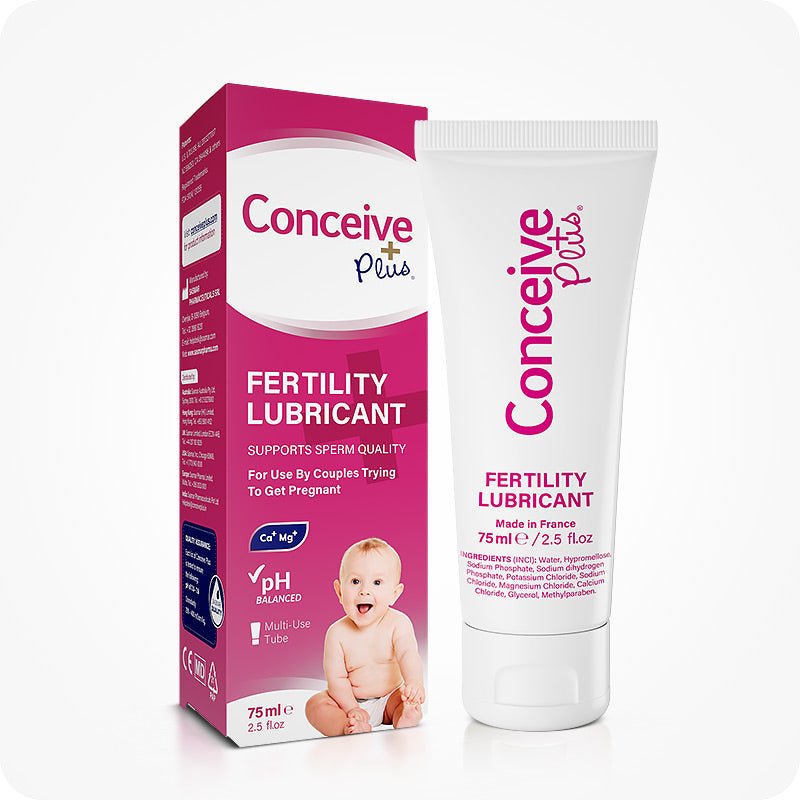
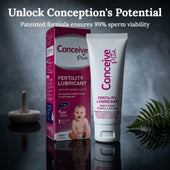
For lubricant needs, Conceive Plus Fertility Lubricant features a unique calcium and magnesium ion formula that actively mimics natural fertile cervical mucus — supporting sperm motility within the female reproductive environment, a distinction that Pre-Seed lacks.
How Long Do Supplements for Low Sperm Motility Take to Work?
This is one of the most important facts about supplements for low sperm motility: sperm production takes approximately 74 days (spermatogenesis). Any supplement must be taken consistently for at least 3 months before results appear in a semen analysis.
Key timelines:
- Weeks 1–4: Antioxidant levels in seminal plasma begin improving
- Weeks 4–8: Mitochondrial function in sperm-producing cells begins to improve
- Weeks 8–12: New sperm generation benefits from improved cellular environment
- Weeks 12–26: Full clinical impact typically measurable in semen analysis
Lifestyle Factors That Work Alongside Supplements for Low Sperm Motility
Supplements for low sperm motility are most effective when combined with targeted lifestyle changes:
- Heat avoidance: Hot tubs, saunas, prolonged laptop use on the lap, and tight underwear all elevate scrotal temperature, reducing sperm motility
- Alcohol reduction: Even moderate consumption is associated with reduced testosterone and impaired sperm motility
- Quit smoking: Smokers show 13–17% lower progressive motility than non-smokers on average
- Antioxidant-rich diet: Mediterranean-style diet provides the dietary antioxidant base that supplements build upon
- Regular moderate exercise: 3–4 sessions/week improves sperm motility; excessive endurance training can paradoxically impair it
- Stress management: Chronic stress elevates cortisol, suppresses testosterone, and increases testicular oxidative stress
What to Expect from a Comprehensive Male Fertility Supplement
A high-quality supplement for low sperm motility should contain:
- ✅ CoQ10 (minimum 100mg, ideally 200–300mg)
- ✅ L-Carnitine or Acetyl-L-Carnitine (minimum 500mg)
- ✅ Zinc (15–30mg)
- ✅ Selenium (100–200mcg)
- ✅ Vitamins C and E (meaningful antioxidant doses)
- ✅ Methylfolate (not folic acid)
- ✅ Vitamin D3
- ✅ No artificial fillers, colours, or unnecessary excipients
Conceive Plus Men's Fertility Support has been formulated to meet every one of these criteria, drawing on the same clinical evidence base reviewed in this article. It's one of the reasons Conceive Plus is recommended by fertility specialists across more than 60 countries.
Frequently Asked Questions: Supplements for Low Sperm Motility
Can supplements really improve sperm motility?
Yes. Multiple randomised controlled trials demonstrate that specific nutrients — particularly CoQ10, L-carnitine, zinc, and selenium — significantly improve progressive sperm motility. Results typically require 3–6 months of consistent supplementation.
What is the fastest way to improve sperm motility?
There is no instant fix — sperm take 74 days to produce. The fastest approach combines targeted supplementation (especially CoQ10 and L-carnitine), heat avoidance, quitting smoking, reducing alcohol, and an antioxidant-rich diet — all started simultaneously.
Is CoQ10 the best supplement for sperm motility?
CoQ10 has the strongest and most consistent evidence base of any single supplement for motility improvement. However, the best clinical outcomes come from comprehensive multi-nutrient formulas that address multiple mechanisms simultaneously.
How much L-carnitine should I take for sperm motility?
Clinical studies typically use 1,000–3,000mg/day of L-carnitine, sometimes combined with 500–1,000mg acetyl-L-carnitine. Higher doses within this range tend to show better motility outcomes.
Do zinc supplements really help sperm motility?
Yes, particularly in men with zinc deficiency. Zinc is essential for testosterone synthesis and flagellar function. Studies using 66mg/day zinc sulphate showed significant motility improvements in infertile men.
How long should I take male fertility supplements?
Most clinical trials run for 3–6 months. You should commit to at least 3 months before reassessing with a semen analysis. Many fertility specialists recommend continuing for 6 months for optimal results.
Can I take multiple supplements together?
Yes — combining CoQ10, L-carnitine, zinc, selenium, and vitamins C and E generally shows superior results to any single supplement alone. A formulated supplement like Conceive Plus ensures correct dosing and avoids harmful nutrient interactions.
Does vitamin D affect sperm motility?
Yes. Vitamin D deficiency is strongly associated with reduced progressive motility. Men with confirmed deficiency show particularly good responses to vitamin D3 supplementation.
What sperm motility percentage is needed for natural conception?
WHO reference values set 42% total motility and 30% progressive motility as the threshold. Natural conception is possible below these levels but becomes progressively less likely as motility decreases.
Should I see a urologist about low sperm motility?
Yes. A urologist or andrologist can identify treatable causes (varicocele, infection, hormonal imbalance) that supplements alone cannot address. Supplementation should complement — not replace — medical evaluation, especially if motility is severely compromised.
Ready to Support Your Fertility Journey?
Conceive Plus products are trusted by thousands of couples worldwide and clinically formulated with the nutrients that matter most.
Shop Conceive Plus Now →