Calcium and Magnesium for Fertility: Why Conceive Plus Contains These Ions


Calcium and Magnesium for Fertility: Why Conceive Plus Contains These Ions
When couples are trying to conceive, the conversation often centers around timing, lifestyle changes, and prenatal vitamins. But there is one aspect of fertility science that frequently goes unnoticed: the critical role that calcium magnesium fertility support plays at the cellular level. Understanding why mineral ions matter for conception can transform how you approach your fertility journey — and explain why Conceive Plus is scientifically formulated with these exact ions.
Calcium magnesium fertility research has expanded dramatically over the past two decades. Scientists now recognize that these two minerals are not merely dietary concerns — they are active participants in the reproductive process itself. From sperm motility to egg fertilization, calcium and magnesium work at every stage of conception.
The Science Behind Calcium and Magnesium in Reproduction
Calcium (Ca²⁺) and magnesium (Mg²⁺) are divalent cations — positively charged ions that your body uses for hundreds of biochemical reactions. In the context of fertility, these minerals play roles that most people have never considered.
Calcium ions are essential for sperm motility activation. When sperm enter the female reproductive tract, calcium influx through specialized channels triggers a process called hyperactivation — the vigorous, whipping motion that allows sperm to penetrate the outer layer of an egg. Without adequate calcium, sperm cannot achieve the thrust necessary for fertilization.
Magnesium serves as a cofactor for over 300 enzymatic reactions, many of which directly impact reproductive function. It regulates ATP production (the energy currency of sperm cells), stabilizes DNA, and modulates calcium channels. Research published in the Journal of Reproductive Biology demonstrated that magnesium deficiency correlates with reduced sperm quality and impaired female reproductive hormone balance.
The interplay between these two minerals is particularly fascinating. Magnesium acts as a natural calcium antagonist — it prevents calcium from flooding cells at inappropriate times while ensuring adequate calcium is available when conception depends on it. This balance is precisely why both ions must be present in the right concentrations.
Sperm Capacitation: The Hidden Process That Determines Fertilization
One of the most critical — and least discussed — fertility concepts is sperm capacitation. This is the final maturation process that sperm must undergo inside the female reproductive tract before they can fertilize an egg. Without capacitation, sperm are essentially infertile, even if they appear healthy under a microscope.
Sperm capacitation involves a cascade of biochemical changes:
- Increased membrane fluidity allowing the sperm head to change shape
- Hyperpolarization followed by rapid depolarization of the sperm membrane
- Calcium influx through CatSper channels (calcium channels found exclusively in sperm)
- Activation of signaling pathways that enable the acrosome reaction
Calcium is the primary trigger for each of these steps. Research from the American Journal of Physiology showed that removing calcium from the reproductive environment completely blocks capacitation. Meanwhile, magnesium helps stabilize the process — ensuring that calcium signals are properly timed and that sperm don't undergo premature capacitation before reaching the egg.
Fertility lubricant ions — specifically the calcium and magnesium formulated into Conceive Plus — are designed to support this exact process. The vaginal environment naturally contains these minerals, but many conventional lubricants dilute or disrupt this ionic balance, potentially hampering sperm capacitation.
Ready to optimize your fertility journey? Shop Conceive Plus Fertility Lubricants →
How Most Lubricants Harm Sperm — and What Makes Conceive Plus Different
This is where the rubber meets the road — or rather, where most lubricants fail couples who are trying to conceive. Standard personal lubricants were never designed with fertility in mind. Many contain ingredients that actively damage sperm:
- Hyperosmotic formulations: When a lubricant is too concentrated (high osmolality), it draws water out of sperm cells through osmosis, causing them to shrink and become non-functional. The WHO recommends lubricants should be isosmotic with semen (285–375 mOsm/kg), yet many popular brands exceed 1,000 mOsm/kg.
- Wrong pH levels: Sperm thrive in a slightly alkaline environment (pH 7.2–8.0). Many lubricants are formulated for vaginal comfort at lower pH levels, which is incompatible with sperm survival.
- Glycerin and propylene glycol: These common humectants increase osmolality and have been shown in clinical studies to reduce sperm motility significantly.
- Absence of essential ions: Natural cervical mucus contains calcium and magnesium at precise concentrations. Standard lubricants lack these ions entirely, leaving sperm without the ionic environment they need for capacitation.
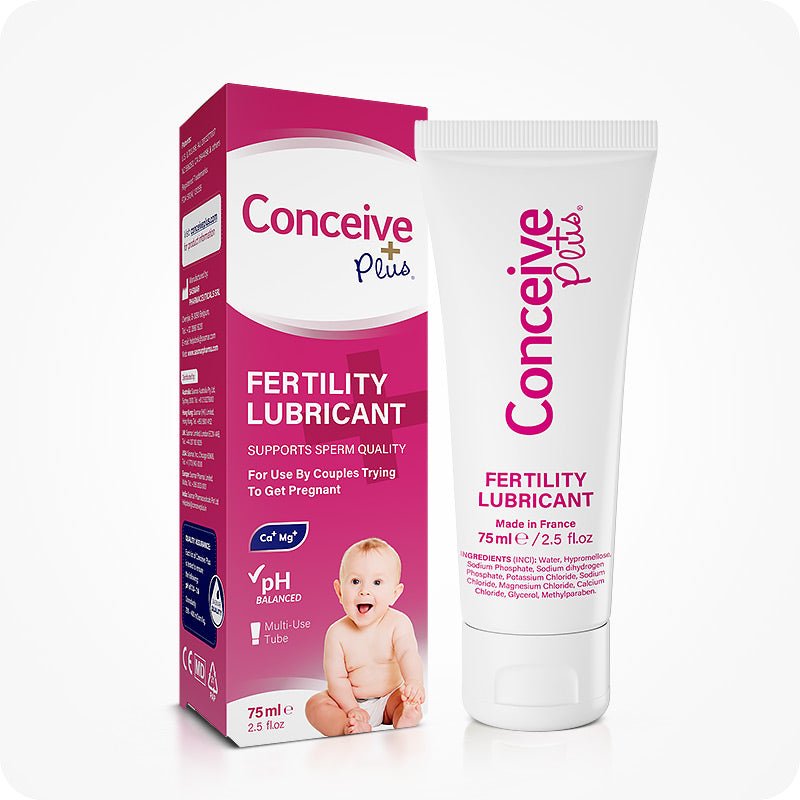
Conceive Plus is specifically formulated to address every one of these problems. Its iso-osmotic, pH-balanced formula — enriched with calcium magnesium for sperm support — replicates the natural vaginal environment that sperm need to thrive.
Conceive Plus vs Pre-Seed: A Scientific Comparison
When couples research fertility-friendly lubricants, two products consistently come up: Conceive Plus and Pre-Seed. Both are marketed as sperm-safe, but their formulations differ in meaningful ways.
Pre-Seed was one of the first fertility-friendly lubricants on the market, and it deserves credit for raising awareness about the harm standard lubricants can cause. Pre-Seed is buffered to sperm-friendly pH and uses a hydroxyethylcellulose base. However, Pre-Seed does not contain calcium or magnesium ions — the minerals that actively support sperm capacitation.
Conceive Plus goes further by incorporating Ca²⁺ and Mg²⁺ directly into its formula. This means that when sperm encounter Conceive Plus, they are bathed in an environment that not only doesn't harm them but actively provides the ionic signals necessary for capacitation. The formula was developed based on research into natural cervical mucus composition, which contains these exact ions at physiologically appropriate concentrations.
Key differences at a glance:
- ✅ Conceive Plus: Contains Ca²⁺ and Mg²⁺ | Iso-osmotic | pH 7.2–8.2 | Supports capacitation
- ⚠️ Pre-Seed: No ionic supplementation | pH balanced | Osmolality appropriate | Does not actively support capacitation
Neither product is "bad" — both are vastly superior to conventional lubricants. But if you want a lubricant that doesn't just avoid harming sperm but actively supports the fertilization process, the ion-enriched formula of Conceive Plus represents a meaningful scientific advantage.
Calcium Magnesium for Sperm: What the Research Shows
The evidence supporting calcium magnesium fertility benefits for sperm function is robust and growing:
Calcium and sperm motility: A landmark study in Science (2003) identified CatSper channels as the primary calcium entry point for sperm. Subsequent research has confirmed that calcium influx through these channels is essential for the hyperactivated motility needed to penetrate the zona pellucida (outer egg layer). Men with CatSper deficiencies are typically infertile despite normal sperm counts.
Calcium and the acrosome reaction: When sperm reach an egg, they must release enzymes from a specialized compartment called the acrosome to penetrate the egg's protective coat. This acrosome reaction is triggered entirely by calcium. Without adequate calcium in the environment, sperm cannot complete fertilization even if they successfully reach the egg.
Magnesium and sperm energy: Sperm require enormous amounts of ATP to fuel their journey to the egg. Magnesium is required for ATP synthesis and also stabilizes ATP molecules themselves. Research from Fertility and Sterility showed that magnesium supplementation improved sperm motility in men with asthenospermia (poor sperm movement).
Calcium magnesium for sperm health isn't just about what couples take orally — it's about the environment sperm encounter during their journey. This is precisely why Conceive Plus incorporates these ions into its lubricant formula rather than leaving ionic support entirely to diet and supplementation.
Women's Fertility: Why Calcium and Magnesium Matter Beyond Sperm
The calcium magnesium fertility connection extends beyond male reproductive health. For women, these minerals play equally important roles:
Ovulation and hormonal regulation: Calcium is involved in the LH surge that triggers ovulation. Research shows that calcium-sensing receptors in the ovary respond to ionic calcium signals to coordinate follicle development and egg release. Women with insufficient calcium may experience irregular ovulation patterns.
Egg activation at fertilization: When a sperm successfully fertilizes an egg, the egg responds with a dramatic calcium wave — a surge of calcium ions that propagates across the entire egg, triggering the development of a new embryo. This "calcium spark" is one of the most fundamental events in mammalian reproduction. The calcium available in the reproductive environment contributes to the pool available for this critical moment.
Uterine function: Magnesium is a natural muscle relaxant. It helps maintain appropriate uterine tone during early pregnancy, potentially reducing the risk of uterine contractions that could interfere with implantation. Some studies have linked magnesium deficiency with increased risk of early pregnancy loss.
Hormonal balance: Both calcium and magnesium influence progesterone and estrogen metabolism. Adequate magnesium has been associated with reduced PMS symptoms, improved progesterone levels in the luteal phase, and better overall hormonal balance — all factors that support conception.
Conceive Plus Ingredients: The Full Ionic Formula
Conceive Plus contains a carefully calibrated blend of conceive plus ingredients designed to work synergistically:
- Calcium Chloride (CaCl₂): Provides bioavailable calcium ions at concentrations matching natural cervical mucus
- Magnesium Chloride (MgCl₂): Supplies magnesium ions that support enzyme activity and cellular energy
- Sodium Chloride (NaCl): Maintains osmolality matching that of semen and cervical mucus
- Potassium Chloride (KCl): Supports membrane potential in sperm cells
- Hydroxyethylcellulose: Water-soluble polymer base that creates the ideal viscosity without harming sperm
- Purified Water: Ultra-pure water base free from contaminants that could damage sperm
The ionic composition of Conceive Plus is not arbitrary — it was specifically formulated to match the electrolyte composition of human cervical mucus as characterized in reproductive biology research. This means that Conceive Plus doesn't just avoid harming sperm; it creates an environment that sperm recognize and respond to as natural.
Conceive Plus is available in multiple formats including gel, pre-filled applicators, and suppositories, allowing couples to choose the delivery method that works best for them. All formats use the same core ionic formula, ensuring consistent support regardless of how you use it.
Dietary Sources of Calcium and Magnesium for Fertility
While Conceive Plus supports ionic balance externally, optimizing your dietary intake of these minerals provides systemic support:
Top calcium sources for fertility:
- Dairy products (yogurt, cheese, milk) — 300–400mg per serving
- Fortified plant milks (oat, almond, soy) — 200–300mg per serving
- Canned sardines and salmon (with bones) — 350mg per serving
- Dark leafy greens (kale, bok choy, broccoli) — 100–200mg per serving
- Tofu (calcium-set varieties) — 200–400mg per serving
Top magnesium sources for fertility:
- Pumpkin seeds — 150mg per ounce (highest dietary source)
- Dark chocolate (70%+ cacao) — 65mg per ounce
- Almonds and cashews — 70–80mg per ounce
- Legumes (black beans, chickpeas, lentils) — 60–90mg per half cup
- Whole grains (quinoa, brown rice) — 50–80mg per serving
- Avocado — 58mg per fruit
- Spinach (cooked) — 78mg per half cup
Recommended daily intake for adults trying to conceive: 1,000mg calcium (1,200mg if over 35) and 310–360mg magnesium for women, 400–420mg for men. Most Western diets are deficient in magnesium particularly, making conscious dietary attention important for anyone trying to conceive.
Practical Guide: Using Conceive Plus Effectively
To maximize the benefits of calcium magnesium fertility support from Conceive Plus, follow these evidence-based guidelines:
Timing: Use Conceive Plus during your fertile window — the 5 days before ovulation and ovulation day itself. Ovulation predictor kits (OPKs) or basal body temperature tracking can help identify this window accurately.
Amount: Use the recommended amount on the packaging. Using too much can actually dilute cervical mucus; too little may not provide adequate coverage. The pre-filled applicators take the guesswork out of dosing.
Application: For internal use, apply 15–20 minutes before intercourse to allow the lubricant to equilibrate to body temperature and disperse appropriately. This timing also allows the ionic environment to establish before sperm introduction.
Complementary practices: Conceive Plus works best as part of a comprehensive fertility approach that includes:
- Prenatal vitamins for women (starting 3 months before trying to conceive)
- Male fertility supplements (zinc, selenium, CoQ10, vitamin C)
- Maintaining healthy body weight (BMI 18.5–24.9)
- Limiting alcohol and eliminating smoking
- Stress management practices
- Regular moderate exercise
Frequently Asked Questions
Q: How exactly does calcium magnesium fertility science work in a lubricant?
A: Conceive Plus incorporates calcium and magnesium chloride salts at concentrations matching natural cervical mucus. When sperm encounter this ionic environment, the calcium supports capacitation and hyperactivation, while magnesium provides energy cofactors. The lubricant creates a biochemically appropriate medium rather than a merely neutral one.
Q: Can I use Conceive Plus during IVF or IUI procedures?
A: Consult your fertility specialist about lubricant use during medically-assisted reproduction. For natural conception attempts, Conceive Plus is designed to be used at home during intercourse.
Q: Does calcium magnesium for sperm supplementation orally also help?
A: Yes — dietary and supplemental calcium and magnesium support sperm production and quality over time. However, oral supplementation affects seminal plasma composition gradually, while Conceive Plus provides immediate ionic support in the lubricant environment during the critical moment of insemination.
Q: How is Conceive Plus different from other fertility-friendly lubricants?
A: Conceive Plus is the only major fertility lubricant that includes both calcium and magnesium ions. Other products may avoid sperm-harming ingredients but don't actively provide the ionic support that sperm require for capacitation.
Q: Is Conceive Plus safe for egg quality?
A: Conceive Plus is designed to be non-toxic to both sperm and eggs. Its physiologically appropriate composition ensures it doesn't interfere with egg development or function.
Q: How long should we use Conceive Plus before expecting results?
A: Conceive Plus provides immediate ionic support during each use — there's no "loading period." Continue using it throughout each cycle during your fertile window. Most fertility specialists recommend trying naturally for 6–12 months before seeking evaluation.
Q: Does fertility lubricant ions science apply to all couples?
A: Yes — the ionic requirements for sperm capacitation are universal. Whether you're using Conceive Plus due to dryness issues or simply because you want to optimize your environment for conception, the ionic formula benefits everyone trying to conceive.
Q: Can I use Conceive Plus alongside fertility supplements?
A: Absolutely. Conceive Plus is complementary to oral fertility supplements, not a replacement. Oral supplements support systemic fertility health; Conceive Plus supports the local reproductive environment.
Q: What if I have sensitivities to lubricants?
A: Conceive Plus is free from parabens, glycerin, and fragrances — common irritants in conventional lubricants. If you have specific sensitivities, review the full ingredient list and consult your healthcare provider.
Q: Where can I purchase Conceive Plus fertility lubricants?
A: Conceive Plus is available through our official website, ensuring you receive genuine product with the correct formulation. We ship internationally to support couples wherever they are on their fertility journey.
Ready to optimize your fertility journey? Shop Conceive Plus Fertility Lubricants →
Understanding calcium magnesium fertility science empowers couples to make informed decisions about every aspect of their conception journey. Conceive Plus is built on this science — providing not just a safe lubricant but an actively supportive ionic environment that works with your body's natural reproductive biology. When every detail matters, choose Conceive Plus.