Can You Get Pregnant When Not Ovulating?
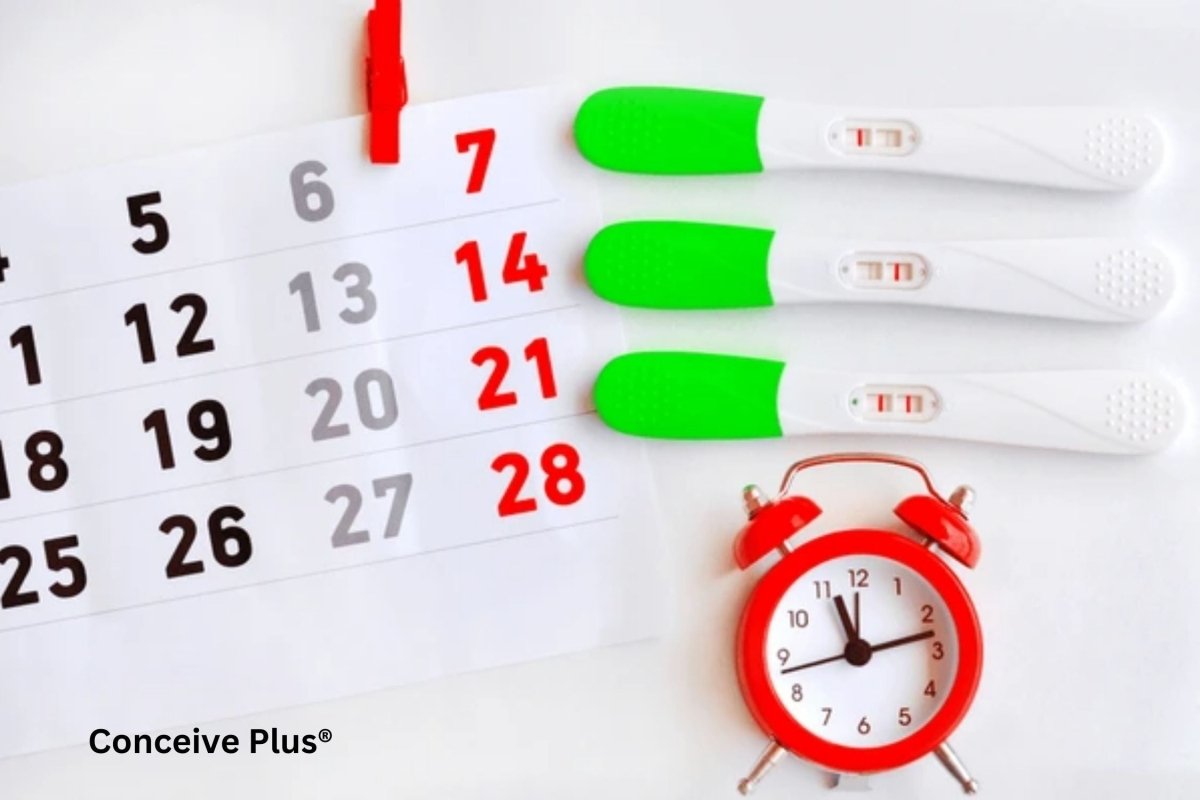

Trying to get pregnant can feel like an emotional rollercoaster. If you’re struggling, you’ve probably asked yourself some tough questions along the way. One of the most common ones is: can you get pregnant when not ovulating? Understanding ovulation and its role in pregnancy is crucial for anyone trying to conceive. But what happens when ovulation doesn’t occur as expected? Can pregnancy still happen? This is exactly what we’ll be diving into today.
For many women, ovulation is the key to pregnancy. If you’re asking can you get pregnant if your not ovulating? you’re not alone. It’s a confusing and sometimes frustrating journey, but you’re not out of options. Let’s break it down and explore what happens when ovulation is missing [1].

What Is Ovulation, and Why Is It So Important?
First, let’s talk about ovulation. Ovulation is the process where an egg is released from the ovaries and travels to the fallopian tubes. This is the only time in your cycle when fertilization can happen. So, if you’re wondering, do you have to be ovulating to get pregnant? the answer is yes. Without ovulation, there’s no egg to be fertilized, and pregnancy isn’t possible.
You might be thinking, can you get pregnant while not ovulating? and the answer is tricky. Without ovulation, the chances of conceiving are virtually impossible. However, sometimes there are medical conditions or irregular cycles that might make it seem like ovulation isn’t happening, when it’s actually just delayed or irregular. But for most women, can you get pregnant when youre not ovulating is a no [2].
Can You Get Pregnant When Your Not Ovulating?
One of the most common questions asked by women trying to conceive is: can you get pregnant if you arent ovulating? The chances are quite low because ovulation is when the egg is released, making fertilization possible. But hormonal imbalances, certain health conditions, or even rare occurrences may make it possible for a woman to get pregnant outside of the usual ovulation cycle [3].
Can You Get Pregnant Outside of Ovulation?
The short answer is, yes. But there's a catch. While ovulation is the best time to conceive, sperm can survive in the female reproductive tract for up to five days. That means if you have unprotected sex a few days before ovulation, sperm may still be present when your body does release an egg.
So, can you get pregnant when you’re not ovulating? No. But if you happen to ovulate on an unexpected cycle, pregnancy could occur outside of your typical fertile window. It’s all about timing.
You might be asking yourself, can I get pregnant when im not ovulating? The short answer is no—pregnancy typically requires ovulation because the egg needs to be released for fertilization. However, it’s worth noting that sometimes ovulation can be irregular, making it harder to predict when you’re fertile [4].
If you’ve ever wondered about other unconventional pregnancy risks, you might also ask, can you get pregnant on your period, as the timing of conception isn’t always as straightforward as it seems.
Can You Get Pregnant Without Ovulation?
Now, if you’re asking, can you get pregnant not ovulating? the odds are pretty much zero. Without an egg available for fertilization, conception cannot take place. However, women with irregular cycles or who don’t ovulate every month may still be able to conceive, though it may take longer.
While it's rare, some women might wonder about the chances of getting pregnant when not ovulating or can u get pregnant without ovulating. The reality is that without ovulation, there’s no egg available for sperm to fertilize, so the chances are very low. However, hormonal imbalances and other factors might cause irregular cycles, sometimes leading to rare cases of pregnancy [5].
Some women also wonder, can you get pregnant while pregnant, as the human body can sometimes behave in unexpected ways when it comes to conception and ovulation.

What Are the Chances of Getting Pregnant During Ovulation?
This is the time when conception is most likely to occur. The chances of pregnancy during ovulation depend on several factors: sperm quality, egg health, and the timing of intercourse. Generally speaking, if you have regular cycles and ovulate as expected, the probability of getting pregnant while ovulating is pretty high—about 20-25% per cycle for healthy couples. But it’s important to understand that the chances of getting pregnant aren’t 100%, even during ovulation.
If you're thinking, "I had unprotected sex on my ovulation day", you’re likely wondering what the chances of pregnancy are. Since sperm can survive for several days, having unprotected sex on the day of ovulation significantly increases your chances of conceiving, as the egg is ready for fertilization [6].

✨ Trying to Conceive?
Our Ovulation & Fertility Bundle combines Myo-Inositol with essential vitamins to support healthy hormone balance and regular ovulation.
Shop Now — $55.00✓ Free shipping on orders over $40 | ✓ Trusted by millions of couples worldwide
Can You Only Get Pregnant When Ovulating?
Yes, pregnancy can only happen if an egg is present to meet the sperm. Ovulation is when the egg is released, making it the ideal time for conception. So, can you only get pregnant when you ovulate? Technically, yes. But the timing of when you have sex before ovulation also plays a role in pregnancy. This is why knowing your fertile window is so important. Without ovulation, pregnancy just can’t happen [7].
Can You Get Pregnant Anytime?
The simple answer is no. Pregnancy is possible only during your fertile window. This includes the days leading up to ovulation and the day of ovulation itself. It’s also why some people who track their cycles are more likely to get pregnant. For example, you might wonder, anyone get pregnant 4 days before ovulation? Yes, it is possible, because sperm can survive up to five days in your reproductive system, so they might still be there when ovulation happens [8].
Can You Get Pregnant If Not Ovulating?
So what about women who don’t ovulate regularly? If you’re asking, can you get pregnant if not ovulating? the chances are low. However, it’s important to remember that there are fertility treatments that can help. Medications like Clomid or hormone injections can help women who aren’t ovulating regularly or at all. These treatments can stimulate your body to release an egg, which increases the chances of pregnancy.
If you’re thinking, can you get pregnant if you are not ovulating? the answer is still no—unless you’re receiving treatment to induce ovulation [9].
Can You Get Pregnant Without Ovulation Discharge?
Some women may ask, can I get pregnant without ovulation discharge? Ovulation discharge is the cervical mucus that changes during your menstrual cycle. When you’re fertile, it becomes clear, slippery, and stretchy. This helps sperm swim toward the egg. If you don’t have ovulation discharge because you aren’t ovulating, then it can be much harder to conceive. But if you do ovulate (with the help of fertility treatments), it’s still possible to conceive even without the usual discharge [10].
Can You Get Pregnant Outside of Your Fertile Window?
Technically, it’s unlikely, but not impossible. If you happen to ovulate outside your typical fertile window, sperm could still fertilize an egg. That’s why understanding your cycle is so important. If you’re wondering, can you get pregnant when you arent ovulating? the answer remains no—pregnancy requires ovulation.
Sometimes people ask, can you get pregnant when you are not ovulating? As frustrating as it might sound, if you're not ovulating, getting pregnant naturally isn’t possible. But many women with irregular cycles can still get pregnant with the right treatment. Fertility treatments like Clomid or even IVF (In Vitro Fertilization) can trigger ovulation, making pregnancy possible. So, the bottom line is, while can you get pregnant when you re not ovulating may seem impossible, medical help can turn the situation around [11].

The Bottom Line
In conclusion, can you get pregnant when not ovulating? The answer is generally no. Without ovulation, there’s no egg to fertilize, and pregnancy cannot happen. However, for women with irregular cycles, conditions like PCOS, or who simply don’t ovulate regularly, fertility treatments can help induce ovulation and increase the chances of conception.
If you’re still wondering, can I get pregnant if im not ovulating? or can you get pregnant if you're not ovulating?, the answer depends on your individual situation. Treatments are available, so it's important to talk to a doctor if you're struggling with ovulation. The road to pregnancy may look different for each woman, but there are options out there for you.
FAQs
Can I get pregnant without ovulating?
No, pregnancy requires ovulation to release an egg that can be fertilized by sperm. However, fertility treatments can help stimulate ovulation if you aren't ovulating naturally.
Can a woman get pregnant when not ovulating?
For most women, the answer is no. But, medical help like fertility drugs can make pregnancy possible.
How long can sperm live outside ovulation?
Sperm can survive up to five days in the female reproductive tract, so if you have unprotected sex a few days before ovulation, there is still a chance for conception.
Can you get pregnant anytime?
Pregnancy is only possible during your fertile window, which is a few days before and including the day of ovulation.
Citations
- Skoracka, K., Ratajczak, A. E., Rychter, A. M., Dobrowolska, A., & Krela-Kaźmierczak, I. (2021). Female Fertility and the Nutritional Approach: The Most Essential Aspects. Advances in nutrition (Bethesda, Md.). Available at: https://pmc.ncbi.nlm.nih.gov/articles/PMC8634384/
- Cordova-Gomez, A., Wong, A. P., Sims, L. B., Doncel, G. F., & Dorflinger, L. J. (2023). Potential biomarkers to predict return to fertility after discontinuation of female contraceptives-looking to the future. Frontiers in reproductive health. Available at: https://pmc.ncbi.nlm.nih.gov/articles/PMC10477712/
- Bendarska-Czerwińska, A., Zmarzły, N., Morawiec, E., Panfil, A., Bryś, K., Czarniecka, J., Ostenda, A., Dziobek, K., Sagan, D., Boroń, D., Michalski, P., Pallazo-Michalska, V., & Grabarek, B. O. (2023). Endocrine disorders and fertility and pregnancy: An update. Frontiers in endocrinology. Available at: https://pmc.ncbi.nlm.nih.gov/articles/PMC9887196/
- Emanuel, R. H. K., Roberts, J., Docherty, P. D., Lunt, H., Campbell, R. E., & Möller, K. (2022). A review of the hormones involved in the endocrine dysfunctions of polycystic ovary syndrome and their interactions. Frontiers in endocrinology. Available at: https://pmc.ncbi.nlm.nih.gov/articles/PMC9705998/
- Fukuda, M., Fukuda, K., Andersen, C. Y., & Byskov, A. G. (2000). Right-sided ovulation favours pregnancy more than left-sided ovulation. Human reproduction (Oxford, England). Available at: https://pubmed.ncbi.nlm.nih.gov/10966987/
- Liu, P. Y., Gebski, V. J., Turner, L., Conway, A. J., Wishart, S. M., & Handelsman, D. J. (2002). Predicting pregnancy and spermatogenesis by survival analysis during gonadotrophin treatment of gonadotrophin-deficient infertile men. Human reproduction (Oxford, England). Available at: https://pubmed.ncbi.nlm.nih.gov/11870114/
- Kapper, C., Oppelt, P., Ganhör, C., Gyunesh, A. A., Arbeithuber, B., Stelzl, P., & Rezk-Füreder, M. (2024). Minerals and the Menstrual Cycle: Impacts on Ovulation and Endometrial Health. Nutrients. Available at: https://pmc.ncbi.nlm.nih.gov/articles/PMC11013220/
- Righarts, A., Dickson, N. P., Parkin, L., & Gillett, W. R. (2017). Ovulation monitoring and fertility knowledge: Their relationship to fertility experience in a cross-sectional study. The Australian & New Zealand journal of obstetrics & gynaecology. Available at: https://pubmed.ncbi.nlm.nih.gov/28326545/
- Yang, A. M., Cui, N., Sun, Y. F., & Hao, G. M. (2021). Letrozole for Female Infertility. Frontiers in endocrinology. Available at: https://pmc.ncbi.nlm.nih.gov/articles/PMC8245002/
- Katz D. F. (1991). Human cervical mucus: research update. American journal of obstetrics and gynecology. Available at: https://pubmed.ncbi.nlm.nih.gov/1755453/
- Oreja-Guevara, C., Gónzalez-Suárez, I., Bilbao, M. M., Gómez-Palomares, J. L., Rodríguez, C. H., Rabanal, A., & Benito, Y. A. (2024). Multiple sclerosis: Pregnancy, fertility, and assisted reproductive technology-a review. Multiple sclerosis and related disorders, 92, 105893. Advance online publication. Available at: https://pubmed.ncbi.nlm.nih.gov/39393162/
🌱 Support Your Fertility Journey
Conceive Plus fertility supplements are clinically formulated to help regulate your cycle and support egg quality.
Shop Fertility Support →Frequently Asked Questions
Recommended by Fertility Experts
Conceive Plus Men's Fertility Support
Designed to support healthy sperm production, motility, and overall male reproductive health with clinically studied nutrients.
Shop Now →Q: Can you get pregnant when you're not ovulating?
A: No, you cannot get pregnant if ovulation does not occur, as ovulation is the biological process required for conception to take place. During ovulation, the ovary releases a mature egg that travels down the fallopian tube, where it can be fertilized by sperm within a 12-24 hour window. Without this egg release, there is no egg available for fertilization, making pregnancy impossible. According to the American Society for Reproductive Medicine (ASRM), ovulation disorders account for approximately 25% of female infertility cases in the United States. If you're experiencing irregular or absent ovulation, consulting with a fertility specialist can help identify underlying causes and treatment options.
Q: Can a female get pregnant without ovulating?
A: Pregnancy cannot occur without ovulation, as an egg must be released from the ovary for conception to happen. Ovulation is the essential first step in the fertility process—without it, there is no egg to be fertilized by sperm. Some women may experience anovulation (absence of ovulation) due to conditions like polycystic ovary syndrome (PCOS), thyroid disorders, or hormonal imbalances. The CDC reports that about 12% of women of reproductive age in the US have difficulty conceiving or carrying a pregnancy to term, with ovulation issues being a common factor. Understanding your ovulation cycle through tracking, medical testing, or fertility supplements that support reproductive health can help improve your chances of conception.
Q: Can a girl get pregnant if she's not ovulating?
A: Pregnancy is not possible without ovulation, as there must be an egg present in the reproductive tract for sperm to fertilize. If ovulation is not occurring, no egg is being released from the ovaries, which makes fertilization biologically impossible. Conditions that prevent ovulation include hormonal imbalances, excessive exercise, severe stress, extreme weight loss, or medical conditions affecting the reproductive system. A healthcare provider can perform tests such as blood work, ultrasounds, or ovulation tracking to determine if ovulation is occurring regularly. Supporting your body's natural ovulation process through proper nutrition, healthy lifestyle choices, and targeted fertility supplements like Conceive Plus can help optimize your reproductive health and increase your chances of conception.
Q: What happens if a female isn't ovulating?
A: If a woman isn't ovulating (a condition called anovulation), pregnancy cannot occur naturally because there is no egg available for fertilization. Anovulation can result from various causes, including hormonal disorders, thyroid problems, low body weight, obesity, extreme stress, or conditions like PCOS, which affects up to 8-13% of women in the US according to the CDC. When ovulation isn't happening regularly, fertility treatments such as ovulation-inducing medications, lifestyle modifications, and medical intervention may be recommended by reproductive health specialists. Tracking your menstrual cycle and monitoring for signs of ovulation—such as changes in cervical mucus and basal body temperature—can help you identify if ovulation is occurring. Additionally, maintaining optimal nutrition and reproductive health through supplements containing key fertility nutrients can support your body's natural ovulation cycle.
Q: Can you get pregnant if you don't have a regular ovulation cycle?
A: Pregnancy is still possible with an irregular ovulation cycle, but conception may be more challenging since irregular cycles make predicting fertile windows more difficult. As long as ovulation is occurring at least occasionally—even if unpredictably—there is a chance for pregnancy, though the window of opportunity may be narrower. Women with irregular cycles may benefit from working with a fertility specialist to track ovulation through methods like ovulation predictor kits, ultrasound monitoring, or blood tests that measure hormonal changes. According to fertility research, couples with irregular cycle patterns often benefit from comprehensive approaches including dietary support, lifestyle optimization, and evidence-based fertility supplements that nourish reproductive health. Conceive Plus offers fertility support designed to work with your body's natural cycle, helping maximize your chances of conception even when ovulation timing is less predictable.
Trusted by Couples in Over 70 Countries
Support Male Fertility From the Inside Out
Male fertility is just as important as female fertility in the conception journey. Conceive Plus Men's range delivers targeted nutritional support to promote healthy sperm and overall reproductive wellbeing.
Shop Men's Range →