Fertility Mystery Solved With Discovery of Protein Key
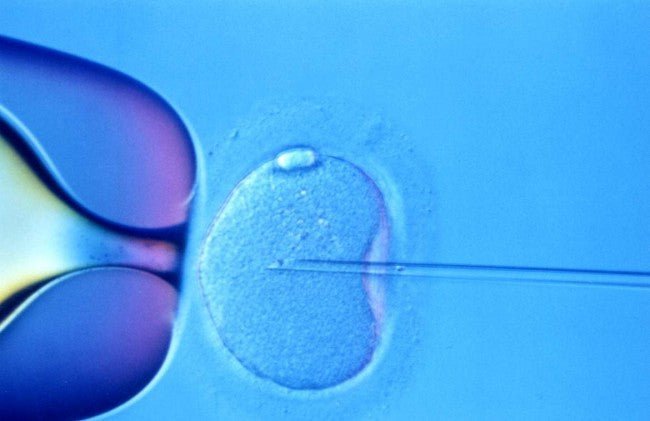

Infertility can be caused by a number of factors, including (but not limited to) DNA damage, chromosomal aberrations, hormonal conditions, age-related factors, and environmental factors. Some infertility conditions are specific to females, some to males, and some arise because of a combination of conditions in the male and female partners. Approximately 12 steps are involved in thoroughly investigating the cause of infertility in couples. In research published this week in Nature, with Dr. Enrica Bianchi of the Wellcome Trust Sanger Institute in Cambridge, UK as the lead author, scientists have moved closer to solving the mystery of fertility with the discovery of a protein that is key to the interaction of sperm and egg.

✨ Trying to Conceive?
Our Ovulation & Fertility Bundle combines Myo-Inositol with essential vitamins to support healthy hormone balance and regular ovulation.
Shop Now — $55.00✓ Free shipping on orders over $40 | ✓ Trusted by millions of couples worldwide
Because fertility is such a monumentally important topic, much research has been done on it. An early key to this mystery was discovered in 2005, when researchers found a protein present on the sperm’s surface that recognizes the egg, thereby enabling fusion to form an embryo. They named it “Izumo,” which is Japanese for “marriage shrine.” In today’s study, the research team is reporting the discovery of a cognate protein on the egg’s surface that binds Izumo: they named it Juno, after the Roman fertility goddess. The research study also confirmed that the binding of Izumo to Juno is the first step in the process of egg and sperm fusion, without which fertilization cannot take place. This particular interaction was difficult to pin down, because the binding between Izumo and Juno is low-affinity (i.e. their binding is quite weak). After the egg is fertilized, it rids itself of the remaining Juno protein on its surface within 40 minutes, so as to prevent more sperm from binding: if more than one sperm fused with the egg, the resulting zygote would have too many chromosomes, and would thus be inviable.
In order to perform the experiment, the research team took the already-characterized Izumo protein, and developed an artificial version of it, to see what it bound to on a mouse egg. They used an assay called AVEXIS, which is designed to identify weak and transient interactions between receptors and the ligands they bind to. In this way, they found a folate receptor called Folr4, which they renamed Juno.
To prove that Juno was essential to female fertility, the research team created genetically modified mice that lacked the Juno protein on their eggs. The eggs of these mice did not fuse with sperm, and the mice were infertile. To complete their understanding of the interaction of Izumo and Juno, the researchers genetically modified male mice that lacked Izumo; these mice were then shown to be infertile.
This research is significant because it offers a shortcut through the many steps involved in treatment of infertility. Eggs and sperm of couples experiencing difficulty conceiving can be genetically screened to determine if their Izumo and Juno proteins are structured correctly. If it is established that these proteins are defective, couples can go directly to a procedure called “ICSI” for intracytoplasmic sperm injection, in which a sperm is directly injected into an egg, using an extremely fine needle. Dr. Gavin Wright, who leads the Institute’s Cell Surface Signalling Laboratory, hopes that the discovery of this key protein interaction will solve at least one fertility mystery, and allow improvements to fertility treatments as well as contraceptives.
🌱 Support Your Fertility Journey
Conceive Plus fertility supplements are clinically formulated to help regulate your cycle and support egg quality.
Shop Fertility Support →Frequently Asked Questions
Recommended by Fertility Experts
Conceive Plus Men's Fertility Support
Designed to support healthy sperm production, motility, and overall male reproductive health with clinically studied nutrients.
Shop Now →What is the Izumo protein and why is it important for fertility?
Izumo is a protein discovered in 2005 that sits on the surface of sperm cells and recognizes the egg, enabling the fusion needed to form an embryo. Its name comes from the Japanese word for "marriage shrine." Without Izumo's interaction with its matching protein on the egg, fertilization cannot occur, making it a critical component of natural conception.
What does the newly discovered Juno protein do?
Juno is a cognate protein on the egg's surface that binds to the Izumo protein on sperm, initiating the fusion process necessary for fertilization. Named after the Roman fertility goddess, Juno is automatically shed from the egg's surface within 40 minutes after fertilization to prevent multiple sperm from penetrating the egg, which would result in an inviable embryo with too many chromosomes.
How might the Izumo and Juno protein discovery help treat infertility?
Understanding the molecular mechanisms of sperm-egg interaction could help fertility specialists diagnose why some couples struggle to conceive and potentially develop new treatments targeting this critical binding process. This research may eventually lead to improved assisted reproductive technologies (ART) like IVF or new therapeutic approaches for unexplained infertility cases.
What are the main causes of infertility that doctors test for?
Infertility can result from multiple factors including DNA damage, chromosomal abnormalities, hormonal imbalances, age-related decline in egg or sperm quality, and environmental exposures. The American Society for Reproductive Medicine (ASRM) recommends a thorough investigation involving approximately 12 steps to identify the specific ca
Why is the binding between Izumo and Juno so difficult to study?
The interaction between Izumo and Juno is characterized by low-affinity binding, meaning the proteins attach very weakly to each other, making it challenging to detect with standard research methods. Scientists had to use a specialized assay called AVEXIS, which is specifically designed to identify these weak and transient interactions between receptors and their binding partners.
Can this protein discovery help explain cases of unexplained infertility?
Yes, this discovery could potentially explain some cases of unexplained infertility where couples have normal hormone levels, regular ovulation, and healthy sperm counts but still cannot conceive naturally. Defects or abnormalities in the Izumo or Juno proteins could prevent proper sperm-egg binding, and future diagnostic tests may be able to identify such issues in infertile patients.
What happens if multiple sperm fertilize an egg?
If more than one sperm penetrates the egg, the resulting zygote will have too many chromosomes, making it inviable and unable to develop into a healthy embryo. This is why the egg automatically removes Juno protein from its surface within 40 minutes after fertilization—this mechanism prevents polyspermy and ensures the embryo has the correct chromosome count for viable development.
Trusted by Couples in Over 70 Countries
Support Male Fertility From the Inside Out
Male fertility is just as important as female fertility in the conception journey. Conceive Plus Men's range delivers targeted nutritional support to promote healthy sperm and overall reproductive wellbeing.
Shop Men's Range →