Fertility Myths Debunked: Separating Evidence-Based Facts from Common Misconceptions About Conception


Why Fertility Myths Persist — and Why the Truth Matters
When you're trying to conceive, advice comes from everywhere — well-meaning friends, family members, internet forums, and social media influencers. Unfortunately, much of this advice is built on fertility myths that have been passed down for generations, often with no scientific basis whatsoever. Believing these myths can cause unnecessary stress, delay conception, and even lead couples to avoid helpful practices.
A 2023 survey by Fertility and Sterility found that 68% of couples trying to conceive believed at least one major fertility myth, and 22% had modified their behaviour based on misinformation. The cost of believing myths isn't just emotional — it can mean months of missed opportunities during your fertile window.
Myth #1: Most Couples Conceive in Their First Month of Trying
The myth: If you're not pregnant after one or two cycles, something must be wrong. The reality: Even under perfect conditions, healthy couples under 35 have only a 20-30% chance of conceiving in any single cycle. The American Society for Reproductive Medicine reports that 60% of couples conceive within 6 months, 80% within 12 months, and 90% within 18 months. Not conceiving immediately is normal — it does not mean infertility.
Many variables must align perfectly: ovulation must occur, the egg must be healthy, sperm must fertilise it, and the embryo must implant. Subtle variations cycle to cycle are entirely normal. Many couples who worry after "only" three months go on to conceive naturally within the first year.
Myth #2: The Missionary Position Maximises Your Chances
The myth: Certain sexual positions help sperm reach the cervix more effectively. The reality: A comprehensive review in Human Reproduction found no evidence that any specific position improves conception rates. Sperm begin moving toward the cervix within seconds regardless of position.
What matters is having intercourse during your fertile window. A study of 560 couples found that women who focused on position actually had slightly lower pregnancy rates — likely because the stress discouraged frequent intercourse during the fertile window.
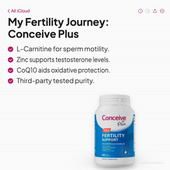
Focus on what actually works. Women's Fertility Support provides the nutritional foundation your body needs for healthy conception.
Myth #3: You Can Only Get Pregnant on Ovulation Day
The myth: Ovulation day is the only time you can conceive. The reality: Your fertile window spans six days — the five days before ovulation plus ovulation day itself. Sperm can survive up to five days in the female reproductive tract. Research in the New England Journal of Medicine found conception probability rises from 10% five days before ovulation to 33% on the two days before.
Myth #4: All Lubricants Are Safe for Conception
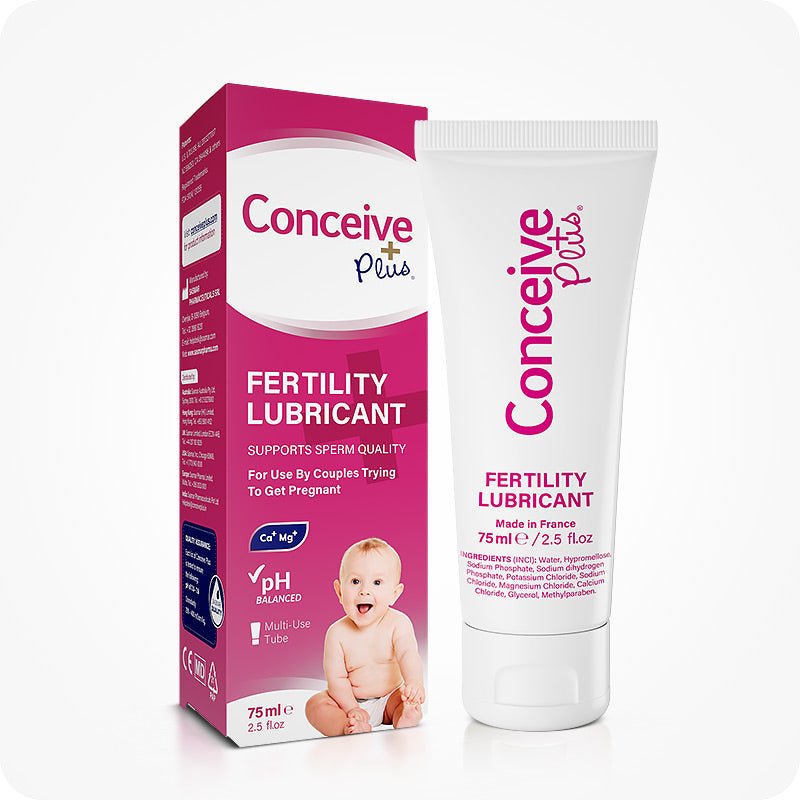
The myth: Any lubricant is fine. The reality: Standard lubricants can impair sperm motility by 60-100%. Fertility-friendly lubricants like Conceive Plus are isotonic and contain calcium and magnesium ions essential for sperm function.
Myth #5: Stress Causes Permanent Infertility
The myth: If you're stressed, you'll never get pregnant. The reality: While chronic stress can delay ovulation, a prospective study found 87% of women with high stress still achieved pregnancy within 12 months. Stress may slow things but rarely stops them entirely.
Myth #6: Age Only Matters for Women
The myth: Male fertility is unaffected by age. The reality: A study of over 8,000 IVF cycles found when the male partner was over 40, pregnancy rates decreased by 23% and miscarriage rates increased by 40%. Advanced paternal age is linked to increased sperm DNA fragmentation.
Age-proof your fertility journey. Women's Fertility Support provides targeted nutrients for reproductive health at every age.
Myth #7: You Shouldn't Exercise While Trying to Conceive
The myth: Exercise reduces fertility. The reality: Moderate exercise improves outcomes — a Harvard study found 30 minutes daily reduced ovulatory infertility risk by 30%. For men, moderate exercise improves sperm quality. Excessive intense exercise beyond 60 minutes daily can disrupt ovulation.
Myth #8: Previous Pregnancy Guarantees Future Fertility
The myth: If you've had a baby before, you can't have infertility. The reality: Secondary infertility affects approximately 11% of couples. Age, weight changes, new medical conditions, and male factor changes can all develop between pregnancies.
Frequently Asked Questions
What is the most common fertility myth? That most couples conceive in the first month. Only 20-30% conceive per cycle.
Does lying with hips raised help conception? No. Evidence shows no benefit.
Can you get pregnant from pre-ejaculate? Yes. Pre-ejaculate can contain sperm.
Does daily sex reduce sperm count? For most men, daily ejaculation does not significantly reduce count.
Is female orgasm required for conception? No. Female orgasm is not required.
Does douching after sex prevent pregnancy? No. Sperm reach the cervix within seconds.
Is organic food necessary for fertility? Not essential, but reducing pesticides may help.
Can cell phones affect sperm quality? Some studies suggest possible effects from electromagnetic radiation.
Does underwear type affect sperm? Evidence is mixed. Scrotal temperature is more affected by prolonged sitting.
Is there a best age to conceive? Fertility peaks in the mid-to-late 20s, but healthy pregnancies occur at all ages.
Don't let myths guide your fertility journey. Women's Fertility Support is backed by science and formulated to support your body's natural fertility processes.