Are Fertility Vitamins and Supplements the Secret to Conceiving Faster?

For many couples, trying to conceive can be a tough journey, one that feels both exciting and nerve-wracking. Getting pregnant isn’t always as simple as it might seem. And as many people find out, boosting the body’s natural ability to conceive sometimes requires more than just time and patience. This is where fertility vitamins and fertility supplements come into the picture. They’re all about giving your body a helping hand to prepare for conception naturally.
Are fertility medications necessary for everyone? No, not always. Often, it’s just about getting the right vitamins and nutrients to create a fertile, balanced environment. Many people are discovering that taking the best fertility pills to get pregnant and other ttc supplements can support the reproductive system’s function in a natural way [1].
Why Fertility Vitamins and Supplements Matter
So, why does everyone keep talking about these fertility vitamins? It’s because they make sure you have all the essential nutrients needed for fertility health. That means helping to regulate hormones, support ovulation, and enhance the health of both eggs and sperm [2]. For many couples, a mix of vitamins to help get pregnant and fertility enhancing vitamins can really make a difference. And let’s be real—when you’re ready to start a family, who doesn’t want to know about the vitamins to get pregnant fast?
Some important fertility nutrients, like folic acid and vitamin D, act as powerful antioxidants. They protect reproductive cells, and that helps maintain egg and sperm quality [3]. So when you’re filling up on these supplements to increase fertility and vitamins for fertility female, you’re supporting both reproductive function and general well-being.
Top Tip: It’s a smart idea to start taking these fertility supplements about three months before trying to conceive. This gives your body time to build up the nutrients and create a healthier environment for pregnancy.

Key Fertility Vitamins for Women
For women, fertility pills for women and vitamins have a big role to play. They help balance hormones, improve egg health, and support a regular cycle. Here are some of the most essential fertility vitamins for women trying to conceive:
Folic Acid
You’ve probably heard about folic acid a thousand times, but it’s that important. It supports cell growth and DNA formation, which is essential for reproduction [4]. Taking folic acid before pregnancy is also proven to lower the risk of neural tube defects in the baby. This nutrient is a must-have in fertility enhancing vitamins and supplements to help get pregnant.
Suggested Dosage: Women should aim for 400-800 mcg of folic acid daily. It’s available in a lot of best fertility supplements and prenatal vitamins to make sure you’re starting strong.
Vitamin D
Vitamin D does wonders for hormone balance, and that’s super important for regular ovulation. Research shows women with good vitamin D levels have higher pregnancy rates [5]. Since vitamin D deficiency is so common, it’s a vital part of vitamins to help fertility and fertility supplements for women.
Suggested Dosage: Aim for 2000-4000 IU daily, but definitely talk to your doctor for exact needs.
Top Tip: Get out in the sun when you can! Just 15-30 minutes in sunlight can help boost vitamin D levels naturally.
Myo-Inositol and D-Chiro Inositol
These two nutrients, commonly found in ovulation supplements, are incredibly helpful for women dealing with PCOS. Myo-inositol, in particular, is a major player in hormone regulation and egg health [6]. That makes it one of the more important vitamins for ovulation.
Suggested Dosage: The typical dose is 2000 mg of myo-inositol combined with 50 mg of d-chiro inositol, twice a day.
Fertility Vitamins for Men
Men’s fertility health also plays a big part in conception, so the right supplements for fertility can be a game-changer for them as well. There are several nutrients men should focus on for optimal sperm health:
Zinc
Zinc is essential for testosterone production and sperm formation, which is why it’s in both fertility pills for women and men. Low zinc levels have been linked to poor sperm quality, so getting enough zinc can help boost fertility. Zinc is also one of the top vitamins to help with fertility for men [7].
Suggested Dosage: Men need around 11 mg of zinc daily.
To understand how zinc can play a vital role in boosting fertility, check out this article on how zinc and fertility connect and how it can enhance reproductive health.
Coenzyme Q10 (CoQ10)
CoQ10 supports cellular energy and is an antioxidant, protecting sperm from oxidative damage. Research suggests it helps with sperm motility, making it a popular choice in vitamins for ttc and best fertility pills to get pregnant for men [8].
Suggested Dosage: For men, 100-300 mg daily is generally recommended for fertility support.
Top Tip: CoQ10 isn’t just for men. Women, especially those over 35, may find it useful for improving egg quality, too.

L-Carnitine
L-carnitine is an amino acid that helps sperm motility, a key factor in conception. This nutrient can be found in supplements to boost fertility and is important for energy production in sperm cells [9].

✨ Trying to Conceive?
Our Ovulation & Fertility Bundle combines Myo-Inositol with essential vitamins to support healthy hormone balance and regular ovulation.
Shop Now — $55.00✓ Free shipping on orders over $40 | ✓ Trusted by millions of couples worldwide
Suggested Dosage: A daily dose of 1000-2000 mg is usually sufficient for men looking to support their fertility.
Creating a Fertility Routine with Supplements
When you’re ready to begin using fertility vitamins and supplements for fertility, it’s all about consistency. A good idea is to include a prenatal multivitamin or one of the best fertility vitamins that has the main nutrients. Here’s what else you should consider:
Vitamin B Complex
The B vitamins help regulate hormones, keep energy levels up, and support reproductive health. B6 and B12 are especially helpful for hormone balance, making them essential vitamins that help with fertility [10].
Top Tip: Look for a B-complex or prenatal that includes both B6 and B12, which are common in best fertility supplements.
Vitamin C
Vitamin C protects reproductive cells from oxidative damage, so it’s great for sperm and egg health. It’s a regular feature in vitamins for fertility female and fertility pills for women for good reason [11].
Suggested Dosage: 500-1000 mg daily is usually effective.
Omega-3 Fatty Acids
These essential fatty acids reduce inflammation and support reproductive health. Studies show they’re good for egg quality and might help reduce the risk of complications. Omega-3s are often recommended as supplements to get pregnant [12].
Suggested Dosage: 500-1000 mg of DHA/EPA daily.
Key Minerals Supporting Fertility
Certain minerals are non-negotiable in a fertility regimen. These minerals are usually part of high-quality vitamins good for fertility and supplements to increase fertility:
Iron: Essential for oxygen flow to cells, reducing risk of ovulatory infertility [13].
Calcium: Needed for cell function, supporting both egg and sperm health [14].
Selenium: An antioxidant that’s important for sperm health and for ovarian function in women [15].
The Role of Fertility-Friendly Lubricants
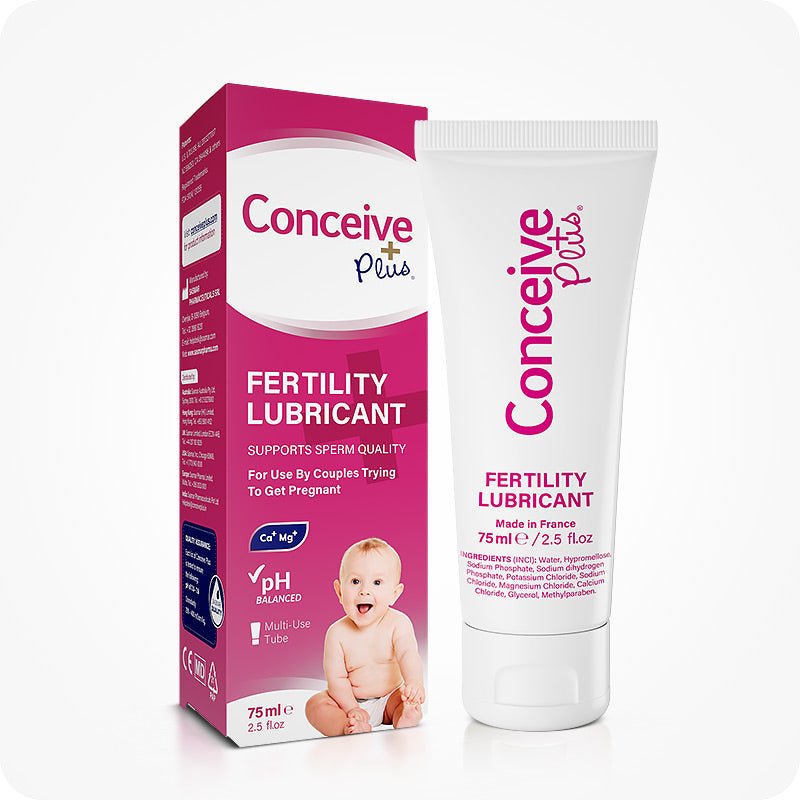
In addition to fertility supplements, using a fertility-friendly lubricant can increase your chances. These lubricants mimic natural fertile fluids, which makes it easier for sperm to reach the egg. They often have minerals like calcium and magnesium to support fertilization, making them a helpful addition for those trying to conceive [16].
Top Tip: Use fertility-friendly lubricants without sperm-harming ingredients to boost the chances of conception.
Getting Started: A Fertility Supplement Timeline
To prepare your body for pregnancy, start a supplement routine at least three months before trying to conceive. Here’s a quick timeline:
- 3-6 Months Before Conception: Begin with vitamins to boost fertility like folic acid, vitamin D, CoQ10, and zinc. These foundational nutrients help prepare your body well in advance.
- 2-3 Months Before Conception: Add specific supplements to get pregnant like myo-inositol for women with PCOS and L-carnitine for men. Keep focusing on a nutrient-rich diet too.
- 1 Month Before Trying to Conceive: Consider a prenatal multivitamin that includes folic acid, DHA, and other key nutrients. Continue with both partners taking vitamins for ttc for optimal results.
During the Conception Phase: Stick with fertility vitamins and vitamins to boost fertility, and include fertility-friendly lubricants when needed.

The Bottom Line
There’s no magic pill, but fertility vitamins and supplements to increase fertility do give the body extra support for a healthy conception process. For those with specific nutritional needs, these supplements can play a huge role in boosting reproductive health. With the right blend of vitamins and minerals, along with a balanced lifestyle, you’re giving yourself a solid foundation for a healthy and successful journey to parenthood.
FAQs
Can fertility supplements for women improve ovulation?
Yes, supplements containing vitamins to help conceive like myo-inositol, vitamin D, and B vitamins can support ovulation and balance hormones.
What are the best fertility vitamins for men?
Men often benefit from CoQ10, zinc, L-carnitine, and vitamin C, as these support sperm quality and motility.
How soon should I start supplements for fertility before trying to conceive?
It’s ideal to start around three months before trying to get pregnant to give your body enough time to build nutrient levels.
What vitamins help with fertility?
Folic acid, vitamin D, and CoQ10 are among the most recommended for supporting reproductive health and enhancing fertility.
Are there vitamins that help you get pregnant?
Yes, key nutrients like folic acid, vitamin D, and antioxidants like vitamin C are known to help you get pregnant faster.
Citations
- Han, Q., Chen, Z. J., & Du, Y. (2022). Dietary supplementation for female infertility: Recent advances in the nutritional therapy for premature ovarian insufficiency. Frontiers in microbiology. Available at: https://pmc.ncbi.nlm.nih.gov/articles/PMC9712792/
- Christian, P., & Stewart, C. P. (2010). Maternal micronutrient deficiency, fetal development, and the risk of chronic disease. The Journal of nutrition. Available at: https://pubmed.ncbi.nlm.nih.gov/20071652/
- Vašková, J., Klepcová, Z., Špaková, I., Urdzík, P., Štofilová, J., Bertková, I., Kľoc, M., & Rabajdová, M. (2023). The Importance of Natural Antioxidants in Female Reproduction. Antioxidants (Basel, Switzerland). Available at: https://pmc.ncbi.nlm.nih.gov/articles/PMC10135990/
- Greenberg, J. A., Bell, S. J., Guan, Y., & Yu, Y. H. (2011). Folic Acid supplementation and pregnancy: more than just neural tube defect prevention. Reviews in obstetrics & gynecology. Available at: https://pmc.ncbi.nlm.nih.gov/articles/PMC3218540/
- Holick M. F. (2007). Vitamin D deficiency. The New England journal of medicine. Available at: https://pubmed.ncbi.nlm.nih.gov/17634462/
- Facchinetti, F., Appetecchia, M., Aragona, C., Bevilacqua, A., Bezerra Espinola, M. S., Bizzarri, M., D'Anna, R., Dewailly, D., Diamanti-Kandarakis, E., Hernández Marín, I., Kamenov, Z. A., Kandaraki, E., Laganà, A. S., Monastra, G., Montanino Oliva, M., Nestler, J. E., Orio, F., Ozay, A. C., Papalou, O., Pkhaladze, L., … Unfer, V. (2020). Experts' opinion on inositols in treating polycystic ovary syndrome and non-insulin dependent diabetes mellitus: a further help for human reproduction and beyond. Expert opinion on drug metabolism & toxicology. Available at: https://pubmed.ncbi.nlm.nih.gov/32129111/
- Prasad A. S. (2013). Discovery of human zinc deficiency: its impact on human health and disease. Advances in nutrition (Bethesda, Md.). Available at: https://pubmed.ncbi.nlm.nih.gov/23493534/
- Safarinejad M. R. (2009). Efficacy of coenzyme Q10 on semen parameters, sperm function and reproductive hormones in infertile men. The Journal of urology. Available at: https://pubmed.ncbi.nlm.nih.gov/19447425/
- Khaw, S. C., Wong, Z. Z., Anderson, R., & Martins da Silva, S. (2020). l-carnitine and l-acetylcarnitine supplementation for idiopathic male infertility. Reproduction & fertility. Available at: https://pmc.ncbi.nlm.nih.gov/articles/PMC8812460/
- J Selhub, JW Miller. The pathogenesis of homocysteinemia: interruption of the coordinate regulation by S-adenosylmethionine of the remethylation and transsulfuration of homocysteine. The American Journal of Clinical Nutrition Available at: https://www.sciencedirect.com/science/article/abs/pii/S0002916523315235
- Poli, G., Leonarduzzi, G., Biasi, F., & Chiarpotto, E. (2004). Oxidative stress and cell signalling. Current medicinal chemistry. Available at: https://pubmed.ncbi.nlm.nih.gov/15134513/
- Gaskins, A. J., & Chavarro, J. E. (2018). Diet and fertility: a review. American journal of obstetrics and gynecology. Available at: https://pubmed.ncbi.nlm.nih.gov/28844822/
- Coad, J., & Conlon, C. (2011). Iron deficiency in women: assessment, causes and consequences. Current opinion in clinical nutrition and metabolic care. Available at: https://pubmed.ncbi.nlm.nih.gov/21934611/
- Prentice A. (2000). Calcium in pregnancy and lactation. Annual review of nutrition. Available at: https://pubmed.ncbi.nlm.nih.gov/10940334/
- Oguntibeju OO, Esterhuyse JS, Truter EJ. Selenium: its potential role in male infertility. Pak J Med Sci. Available at: https://pjms.com.pk/issues/aprjun109/article/reviewarticle1.html
- Mowat, A., Newton, C., Boothroyd, C., Demmers, K., & Fleming, S. (2014). The effects of vaginal lubricants on sperm function: an in vitro analysis. Journal of assisted reproduction and genetics. Available at: https://pubmed.ncbi.nlm.nih.gov/24390681/
🌱 Support Your Fertility Journey
Conceive Plus fertility supplements are clinically formulated to help regulate your cycle and support egg quality.
Shop Fertility Support →Frequently Asked Questions
Recommended by Fertility Experts
Conceive Plus Men's Fertility Support
Designed to support healthy sperm production, motility, and overall male reproductive health with clinically studied nutrients.
Shop Now →What vitamins should I start taking before trying to conceive?
The American Society for Reproductive Medicine (ASRM) recommends starting with prenatal vitamins containing folic acid (400-800 mcg daily), vitamin D, and CoQ10 about three months before attempting conception. Other beneficial supplements include vitamin E, selenium, and omega-3 fatty acids, though it's best to consult with your healthcare provider or a fertility specialist to determine which supplements are right for your individual needs.
Is there scientific evidence that fertility supplements actually help you get pregnant?
Yes, research shows that certain nutrients support reproductive health—particularly folic acid, which reduces neural tube defects, and vitamin D, which plays a role in ovulation and hormone regulation. However, supplements work best as part of a comprehensive approach including healthy lifestyle habits; they are not a replacement for medical treatment if you have underlying fertility issues. If you've been trying to conceive for over a year (or six months if you're over 35), consult a fertility specialist rather than relying solely on supplements.
Are fertility vitamins covered by insurance?
Coverage varies significantly by insurance plan and state regulations. While some plans may cover prenatal vitamins when prescribed by a doctor, most fertility-specific supplements are considered over-the-counter products and typically are not covered. Contact your insurance provider directly to understand your coverage, and ask your healthcare provider if they can write a prescription, which sometimes improves coverage eligibility.
What's the difference between prenatal vitamins and fertility supplements?
Prenatal vitamins are formulated to support fetal development during pregnancy and contain higher levels of certain nutrients like folic acid and calcium. Fertility supplements are designed pre-conception to optimize reproductive health and often include additional ingredients like CoQ10, inositol, or DHEA. While prenatal vitamins can be used before conception, fertility-specific supplements may offer more targeted nutritional support for egg and sperm quality.
Can men benefit from fertility vitamins and supplements?
Yes, male fertility supplements can improve sperm quality, motility, and count by supporting reproductive function through antioxidants and key nutrients. Research supports the use of CoQ10, selenium, vitamin C, vitamin E, and zinc for male fertility; however, the evidence is strongest when men also maintain healthy lifestyle habits including exercise, stress management, and avoiding smoking and excessive alcohol. Men should consult with their doctor or a urologist specializing in male fertility before starting any supplement regimen.
How long does it take for fertility vitamins to work?
Most fertility experts recommend taking supplements for at least three months before attempting conception, as this timeframe allows your body to build up nutrient stores and supports the full reproductive cycle. For women, this aligns with the approximately 90-day maturation period of eggs; for men, sperm production takes roughly 74 days. Results vary by individual, and if you don't conceive after six months to a year of supplementation and trying, consult a fertility specialist for evaluation.
Are there any side effects or risks from taking fertility supplements?
Most fertility vitamins and supplements are safe when taken at recommended doses, but some can cause mild side effects like nausea, constipation, or headaches. Certain supplements can interact with medications or medical conditions, so it's important to disclose all supplements to your healthcare provider before starting them. If you're considering supplements like DHEA or high-dose vitamin A, discuss these specifically with your fertility doctor, as they require medical supervision.
Trusted by Couples in Over 70 Countries
Support Male Fertility From the Inside Out
Male fertility is just as important as female fertility in the conception journey. Conceive Plus Men's range delivers targeted nutritional support to promote healthy sperm and overall reproductive wellbeing.
Shop Men's Range →