What Is Sperm Viscosity and How Can You Improve It?


So, let’s talk about sperm viscosity. It’s not something people think about every day, but it’s actually a big deal when you're trying to conceive. Basically, it’s about how thick or thin your semen is. And if it's off, well, it can affect whether or not sperm can make their way to the egg. When seman viscosity isn’t right—whether too thick or too thin—it can seriously mess with sperm’s ability to swim. And that, of course, makes getting pregnant more difficult. Let’s break it down and figure out how to improve sperm viscosity, shall we?
Why Sperm Viscosity Matters
The reason sperm viscosity matters is simple: if sperm can’t move, they can’t reach the egg. If the semen is too thick, sperm have to work harder to swim through it. It’s kind of like trying to run in deep water, you know? When viscous seminal fluid is too thick, it slows everything down, making sperm progression a challenge [1]. And if it’s too watery? Well, the sperm might not survive long enough to reach their destination [2].

Doctors can check the viscosity of sperm in a semen analysis. Normally, semen should liquefy after about 15 to 30 minutes. This helps sperm move freely [3]. But if the viscosity of seminal fluid stays too high, the semen remains thick, and sperm get stuck. This could definitely lower your chances of conception.
Top Tip: Staying hydrated can help keep sperm viscosity in the right range, making it easier for sperm to swim.
What Affects Sperm Viscosity?
Several things can affect the viscosity of seminal fluid, some of which are lifestyle choices, others might be medical issues. Let’s go through a few:
- Dehydration: If you don’t drink enough water, your seman viscosity can become thicker, making it harder for sperm to move [4].
- Infections or Inflammation: If there’s any kind of infection in the reproductive system, it could lead to viscous seminal fluid, which can slow sperm down [5].
- Diet: Your diet can also affect the viscosity of sperm. Nutrients like zinc and selenium are super important for keeping sperm and semen healthy [6].
- Hormonal Imbalances: If your testosterone levels are low, that can mess with your semen’s thickness [7].
Top Tip: Eating foods rich in zinc and selenium can help balance viscous seminal fluid and improve life cycle of a sperm.
How Sperm Viscosity Affects Fertility
If your sperm viscosity is too high, it can be a real obstacle for sperm trying to make their way to the egg. The thicker the semen, the harder it is for sperm to swim through it [8]. And when sperm can’t swim, they can’t fertilize the egg, period. That’s why thick viscous seminal fluid can slow down or even stop sperm progression [9].
When the viscosity of seminal fluid is abnormal, it can also mess with the sperm itself. Thick semen can trap sperm, making it harder for them to move, which lowers the chances of conception [10]. So if you’ve been trying to get pregnant and it's taking longer than expected, checking the sperm viscosity might be a smart move.
Top Tip: Avoid smoking and drinking too much alcohol. Both of these can thicken sperm viscosity and make it harder to conceive [11].

How to Improve Sperm Viscosity Naturally
You can improve how to improve sperm viscosity with some pretty straightforward changes to your daily routine. Here’s what you can do:

✨ Support Healthy Sperm
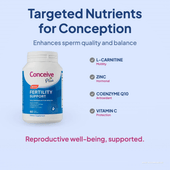
Our Motility Support supplement contains Zinc, CoQ10, and L-Carnitine — clinically studied nutrients for sperm health and motility.
Shop Now — $34.95✓ Free shipping on orders over $40 | ✓ Trusted by millions of couples worldwide
- Drink More Water: This is the simplest way to reduce semen viscosity. Staying hydrated keeps your semen fluid, which allows sperm to swim freely [12]. So, does water increase sperm count? While water helps maintain fluidity, it's just one part of the equation.
- Eat a Balanced Diet: A diet rich in zinc, magnesium, and selenium helps maintain proper sperm progression. These nutrients support sperm health and keep semen at the right consistency [13].
- Supplements Can Help: L-Arginine and Taurine are two amino acids that improve blood flow to the reproductive organs, helping to regulate sperm viscosity [14].
- Exercise: Regular physical activity can balance hormones, improve blood circulation, and help with the viscosity of sperm, all of which can boost fertility [15].
Top Tip: A combo of healthy eating, hydration, and exercise is key to maintaining normal viscous seminal fluid and improving fertility.
The Bottom Line
At the end of the day, sperm viscosity is something you need to pay attention to if you’re trying to conceive. Whether it’s too thick or too thin, abnormal viscosity of sperm can slow down the sperm, making it harder to get pregnant. Luckily, simple lifestyle changes—like drinking more water, eating the right foods, and regular exercise—are your answer to the question how to improve sperm viscosity and increase your chances of starting a family.

FAQs
What’s normal sperm viscosity?
Normal sperm viscosity means semen should liquefy within 15-30 minutes after ejaculation, allowing sperm to swim freely.
How does thick semen impact fertility?
Thick viscous seminal fluid makes it harder for sperm to swim, which can reduce the chances of them reaching and fertilizing the egg.
Can diet affect sperm viscosity?
Yes, a healthy diet rich in zinc and selenium can improve the viscosity of seminal fluid and promote better sperm health.
How do I improve sperm viscosity naturally?
Drinking enough water, eating nutrient-dense foods, and exercising regularly can all help regulate sperm viscosity and improve fertility.
Is sperm viscosity a common fertility issue?
Yes, abnormal sperm viscosity is a pretty common problem but can be improved with lifestyle changes, often leading to better fertility outcomes [16].
Citations
- Ahadi M, Aliakbari F, Latifi S, Hosseini SJ, Gharib A, Movafagh A, Abdolalian Z, Dehghan A, Moradi A, Kazeminejad B, Rakhshan A, Jamali E, Allameh F, Moradi A. Evaluation of the Standardization in Semen Analysis Performance According to the WHO Protocols Among Laboratories in Tehran, Iran. Iran J Pathol. Available at: https://www.ncbi.nlm.nih.gov/pmc/articles/PMC6679670/
- Vasan SS. Semen analysis and sperm function tests: How much to test? Indian J Urol. Available at: https://www.ncbi.nlm.nih.gov/pmc/articles/PMC3114587/
- Cooper TG, Noonan E, von Eckardstein S, Auger J, Baker HW, Behre HM, Haugen TB, Kruger T, Wang C, Mbizvo MT, Vogelsong KM. World Health Organization reference values for human semen characteristics. Hum Reprod Update. Available at: https://pubmed.ncbi.nlm.nih.gov/19934213/
- Hoang-Thi AP, Dang-Thi AT, Phan-Van S, Nguyen-Ba T, Truong-Thi PL, Le-Minh T, Nguyen-Vu QH, Nguyen-Thanh T. The Impact of High Ambient Temperature on Human Sperm Parameters: A Meta-Analysis. Iran J Public Health. Available at: https://www.ncbi.nlm.nih.gov/pmc/articles/PMC9288403/
- Dutta S, Sengupta P, Slama P, Roychoudhury S. Oxidative Stress, Testicular Inflammatory Pathways, and Male Reproduction. Int J Mol Sci. Available at: https://www.ncbi.nlm.nih.gov/pmc/articles/PMC8471715/
- Agarwal A, Majzoub A. Role of Antioxidants in Assisted Reproductive Techniques. World J Mens Health. Available at: https://www.ncbi.nlm.nih.gov/pmc/articles/PMC5583374/
- Yeap BB, Page ST, Grossmann M. Testosterone treatment in older men: clinical implications and unresolved questions from the Testosterone Trials. Lancet Diabetes Endocrinol. Available at: https://pubmed.ncbi.nlm.nih.gov/30017800/
- Gruenewald DA, Matsumoto AM. Testosterone supplementation therapy for older men: potential benefits and risks. Available at: https://www.ncbi.nlm.nih.gov/books/NBK69838/
- Guzick DS, Overstreet JW, Factor-Litvak P, Brazil CK, Nakajima ST, Coutifaris C, Carson SA, Cisneros P, Steinkampf MP, Hill JA, Xu D, Vogel DL; National Cooperative Reproductive Medicine Network. Sperm morphology, motility, and concentration in fertile and infertile men. N Engl J Med. Available at: https://pubmed.ncbi.nlm.nih.gov/11794171/
- Henkel R. Sperm preparation: state-of-the-art--physiological aspects and application of advanced sperm preparation methods. Asian J Androl. Available at: https://pubmed.ncbi.nlm.nih.gov/22138904/
- Mannucci A, Argento FR, Fini E, Coccia ME, Taddei N, Becatti M, Fiorillo C. The Impact of Oxidative Stress in Male Infertility. Front Mol Biosci. Available at: https://www.ncbi.nlm.nih.gov/pmc/articles/PMC8766739/
- Puliatti S, Toso S, Ticonosco M, Rabito S, Sighinolfi MC, Ferrari R, Rochira V, Santi D, Trenti T, Navarra M, Ferretti S, Montano L, Micali S. Semen Analysis in "Urology-Naïve" Patients: A Chance of Uroandrological Screening in Young Males. J Clin Med. Available at: https://www.ncbi.nlm.nih.gov/pmc/articles/PMC10253905/
- Vickram S, Rohini K, Srinivasan S, Nancy Veenakumari D, Archana K, Anbarasu K, Jeyanthi P, Thanigaivel S, Gulothungan G, Rajendiran N, Srikumar PS. Role of Zinc (Zn) in Human Reproduction: A Journey from Initial Spermatogenesis to Childbirth. Int J Mol Sci. Available at: https://www.ncbi.nlm.nih.gov/pmc/articles/PMC7926410/
- Kaltsas A. Oxidative Stress and Male Infertility: The Protective Role of Antioxidants. Medicina (Kaunas). Available at: https://www.ncbi.nlm.nih.gov/pmc/articles/PMC10608597/
- Vaamonde D, Garcia-Manso JM, Hackney AC. Impact of physical activity and exercise on male reproductive potential: a new assessment questionnaire. Rev Andal Med Deport. Available at: https://www.ncbi.nlm.nih.gov/pmc/articles/PMC5897111/
- Baskaran S, Finelli R, Agarwal A, Henkel R. Diagnostic value of routine semen analysis in clinical andrology. Andrologia. Available at: https://onlinelibrary.wiley.com/doi/abs/10.1111/and.13614
🌱 Boost Male Fertility Naturally
Conceive Plus Men's Motility Support is formulated with the nutrients that matter most for sperm quality, count, and motility.
Shop Men's Fertility →Frequently Asked Questions
Recommended by Fertility Experts
Conceive Plus Men's Fertility Support
Designed to support healthy sperm production, motility, and overall male reproductive health with clinically studied nutrients.
Shop Now →Q: What is considered normal sperm viscosity?
A: According to the World Health Organization (WHO) standards, normal semen should liquefy within 15-30 minutes after ejaculation, indicating proper viscosity. The American Society for Reproductive Medicine (ASRM) notes that semen viscosity is measured on a scale, with normal semen having a consistency similar to raw egg white that gradually becomes more fluid. When semen remains too thick or fails to liquefy properly, it's classified as abnormal viscosity and can impair sperm motility by up to 50%, making conception significantly more difficult. Healthcare providers assess viscosity during standard semen analysis tests, which are often recommended when couples have been trying to conceive for over a year without success.
Q: Can diet improve sperm viscosity and fertility?
A: Yes, diet plays a significant role in semen quality, including viscosity. Foods rich in antioxidants like zinc, selenium, and vitamin C—found in nuts, seeds, citrus fruits, and leafy greens—have been shown in studies to improve sperm parameters and overall reproductive health. Adequate hydration is also critical, as dehydration can increase semen viscosity and reduce sperm motility. Additionally, reducing processed foods, excess sugar, and unhealthy fats while increasing omega-3 fatty acids can support better semen production. Supplements like Conceive Plus's male fertility formulas are designed to work alongside a healthy diet, providing targeted nutrients that support optimal semen viscosity and sperm function.
Q: Does viscosity affect male fertility and conception chances?
A: Abnormal sperm viscosity directly impacts male fertility by preventing sperm from moving efficiently through the female reproductive tract to reach the egg. Research shows that men with viscosity issues experience reduced fertility rates, with some studies indicating a 20-30% decrease in conception probability compared to men with normal semen viscosity. When semen is too thick, sperm cannot swim properly, and when it's too thin, it may not provide adequate support and nutrients for sperm survival. The American Urological Association recognizes viscosity abnormalities as a treatable factor in male factor infertility, making it important to address through medical evaluation and lifestyle modifications.
Q: How long does it take to improve sperm viscosity?
A: Improving sperm viscosity typically takes 2-3 months, as this is the standard timeline for new sperm production (spermatogenesis) to complete its cycle. Lifestyle changes such as improved nutrition, increased hydration, regular exercise, and stress reduction can begin showing benefits within this timeframe, though individual results vary. If you're using fertility supplements designed to support semen quality, consistent use over at least 3 months is recommended for optimal results, as sperm cells need time to develop with the added nutritional support. Men should follow up with their healthcare provider or fertility specialist after implementing changes to reassess semen parameters through repeat testing.
Q: What causes thick or abnormal sperm viscosity?
A: Abnormal sperm viscosity can result from several factors including dehydration, nutritional deficiencies (particularly zinc and vitamin C), infections, hormonal imbalances, and certain genetic conditions. Lifestyle factors such as smoking, excessive alcohol consumption, heat exposure to the testicles, and prolonged sitting can also negatively affect semen quality and viscosity. Some medications and medical conditions like diabetes or urogenital infections can increase viscosity by affecting the seminal fluid composition. If you experience abnormal viscosity, consulting a urologist or fertility specialist is important to identify the underlying cause and develop a targeted treatment plan that may include dietary changes, supplements, or medical intervention.
Trusted by Couples in Over 70 Countries
Support Male Fertility From the Inside Out
Male fertility is just as important as female fertility in the conception journey. Conceive Plus Men's range delivers targeted nutritional support to promote healthy sperm and overall reproductive wellbeing.
Shop Men's Range →