Baby born after womb transplantation
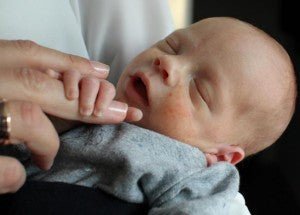

In September, a 36-year-old Swedish woman became the first ever to give birth from a transplanted womb. A new paper published in The Lancet provides a "proof of concept" report on the case.
"Absolute uterine factor infertility" is the only type of female infertility still considered to be untreatable. This condition is often a consequence of Rokitansky syndrome, which is when a woman is born without a womb. Adoption and surrogacy have so far been the only options for women with absolute uterine factor infertility to acquire motherhood.
However, the news of the first baby to be born from a woman with Rokitansky syndrome who received a womb transplant brings hope to women with forms of absolute uterine factor infertility.
The researchers who performed the transplant - from the University of Gothenburg, Sweden - have been investigating the viability of womb transplantation for over 10 years. Before attempting the procedure in humans, the researchers conducted trials in rodents and non-human primates.
In 2013, the researchers initiated transplants in nine women with absolute uterine factor infertility who had received wombs from live donors. The Swedish woman who recently gave birth was one of these women.
Although two of the women in the trial had to have hysterectomies during the initial months - because of severe infections and thrombosis - the team reported success in the other seven women.

✨ Trying to Conceive?
Our Ovulation & Fertility Bundle combines Myo-Inositol with essential vitamins to support healthy hormone balance and regular ovulation.
Shop Now — $55.00✓ Free shipping on orders over $40 | ✓ Trusted by millions of couples worldwide
These women began menstruating during the first 2-3 months after transplant. Although occasional episodes of "mild rejection" were detected in some of the women, the researchers were able to overcome this by prescribing a short course of immunosuppression therapy.
Outside of this trial, only two other womb transplants had been attempted. The first of these required the womb to be removed after 3 months, due to progressive uterine necrosis.
The second attempt involved a womb from a deceased donor being transplanted into a woman with Rokitansky syndrome. Although this woman became pregnant twice via embryo transfer, both pregnancies resulted in miscarriage before week 6.
Eggs were fertilized using IVF prior to mother receiving womb transplant
The Swedish woman who gave birth received her womb from a 61-year-old family friend. As the recipient had intact ovaries, she was able to produce eggs, which were then fertilized using IVF prior to the transplant.
A total of 11 embryos were produced and frozen using this method. One year after the womb transplant, one of these embryos was transferred to the transplanted womb.
Prof. Mats Brännström, who led the team of researchers, says that fetal growth was normal through the first 31 weeks of pregnancy. "We found only one episode of mild rejection during the pregnancy that was successfully treated with corticosteroids," he says, "and the woman was working full time until the day before delivery."
As a consequence of preeclampsia, the woman was admitted to hospital at 31 weeks and her baby was delivered by cesarean section 16 hours later.
Although an abnormal fetal heart rate had been detected when the woman was admitted to the hospital, in the days after being born, the baby scored as being in perfect health according to the Apgar rating scale for determining the health of newborns.
The infant was discharged from the neonatal unit after 10 days, and the researchers say that both mom and baby are continuing to do well.
According to Prof. Brännström:
"Our success is based on more than 10 years of intensive animal research and surgical training by our team and opens up the possibility of treating many young females worldwide that suffer from uterine infertility. What is more, we have demonstrated the feasibility of live-donor uterus transplantation, even from a postmenopausal donor."
🌱 Support Your Fertility Journey
Conceive Plus fertility supplements are clinically formulated to help regulate your cycle and support egg quality.
Shop Fertility Support →Frequently Asked Questions
Recommended by Fertility Experts
Conceive Plus Men's Fertility Support
Designed to support healthy sperm production, motility, and overall male reproductive health with clinically studied nutrients.
Shop Now →What is absolute uterine factor infertility and how common is it in the US?
Absolute uterine factor infertility (AUFI) occurs when a woman is born without a functional uterus or has had it surgically removed, making natural pregnancy impossible. The most common cause is Mayer-Rokitansky-Küster-Hauser (MRKH) syndrome, which affects approximately 1 in 4,500 women. Until recently, this was the only form of female infertility considered completely untreatable, leaving adoption and gestational surrogacy as the only options for biological motherhood.
Is uterus transplantation approved by the FDA in the United States?
Uterus transplantation is not yet FDA-approved for routine clinical use in the US, though the Swedish case provides important proof of concept that may accelerate the approval process. Currently, American fertility clinics cannot offer this procedure outside of formal clinical trials. Women interested in uterus transplantation in the US should consult with major academic fertility centers to inquire about ongoing research studies or future trial opportunities.
How does the uterus transplant procedure work and what does it involve?
The procedure involves surgically transplanting a uterus from a donor (living relative or deceased) into a woman with absolute uterine factor infertility, followed by immunosuppression therapy to prevent rejection. After the transplant successfully engrafts and menstruation resumes (typically 2-3 months post-transplant), the woman undergoes standard IVF to create embryos, which are then transferred into the transplanted uterus for pregnancy. The transplant is not intended to be permanent and may be removed after childbearing is complete.
What are the risks and complications associated with uterus transplantation?
Risks include surgical complications, organ rejection requiring lifelong immunosuppressive medication, infection, thrombosis (blood clots), and the unknown long-term effects of immunosuppression on pregnancy outcomes. Immunosuppressive drugs carry their own side effects and require careful monitoring, and there are potential risks to fetal development that are still being studied. Add
Will insurance cover uterus transplant surgery in the US?
Currently, uterus transplantation is not covered by most US insurance plans because it is still considered experimental and lacks FDA approval for clinical use. Once the procedure becomes FDA-approved and moves out of the research phase, insurance coverage will depend on individual plan policies and may vary significantly between insurers. Patients should contact their insurance provider directly and discuss potential trial participation, which may offer coverage for experimental procedures.
What are the alternatives to uterus transplant for women with absolute uterine factor infertility?
The primary alternatives include gestational surrogacy (where a surrogate carries an embryo created from the intended mother's eggs) and adoption. Gestational surrogacy allows biological connection to the child but involves legal, emotional, and financial considerations, and costs typically range from $80,000-$150,000 in the US. Adoption provides the opportunity to build a family through a different pathway and may be covered by some employer insurance plans or adoption assistance programs.
What does the American Society for Reproductive Medicine (ASRM) say about uterus transplantation?
ASRM recognizes uterus transplantation as a promising experimental procedure for women with absolute uterine factor infertility but emphasizes it should only be performed within carefully designed clinical research protocols. ASRM recommends that informed consent include discussion of risks related to immunosuppression, long-term unknowns about fetal health, and the need for ongoing medical monitoring. As evidence accumulates from research trials, ASRM continues to evaluate the procedure's safety and efficacy to inform future clinical practice guidelines.
Trusted by Couples in Over 70 Countries
Support Male Fertility From the Inside Out
Male fertility is just as important as female fertility in the conception journey. Conceive Plus Men's range delivers targeted nutritional support to promote healthy sperm and overall reproductive wellbeing.
Shop Men's Range →