Fertility Testing: Your Complete Guide to Understanding Your Options


2026-07-21 — By the Conceive Plus Team
What Is Fertility Testing and Why Does It Matter?
Fertility testing refers to a range of medical evaluations designed to assess both male and female reproductive health. Far from being a last resort for couples who have been trying for years, fertility testing is increasingly recognised as a proactive step — one that can uncover underlying issues early and dramatically shorten the time to conception.
According to the World Health Organization, approximately 1 in 6 couples worldwide experiences infertility at some point in their reproductive lives. Yet many of these couples spend months or even years trying to conceive without understanding the root cause. Fertility testing provides answers where there were only questions, and those answers open the door to targeted, effective treatment.
The goal of fertility testing is not simply to diagnose problems — it is to create a roadmap. Whether the issue is hormonal, structural, or related to sperm quality, knowing what you are dealing with allows you and your healthcare provider to choose the most appropriate path forward. In many cases, simple lifestyle adjustments or minimally invasive treatments can make a profound difference.
The Female Fertility Workup: What to Expect
Track Your Fertility Journey with Confidence
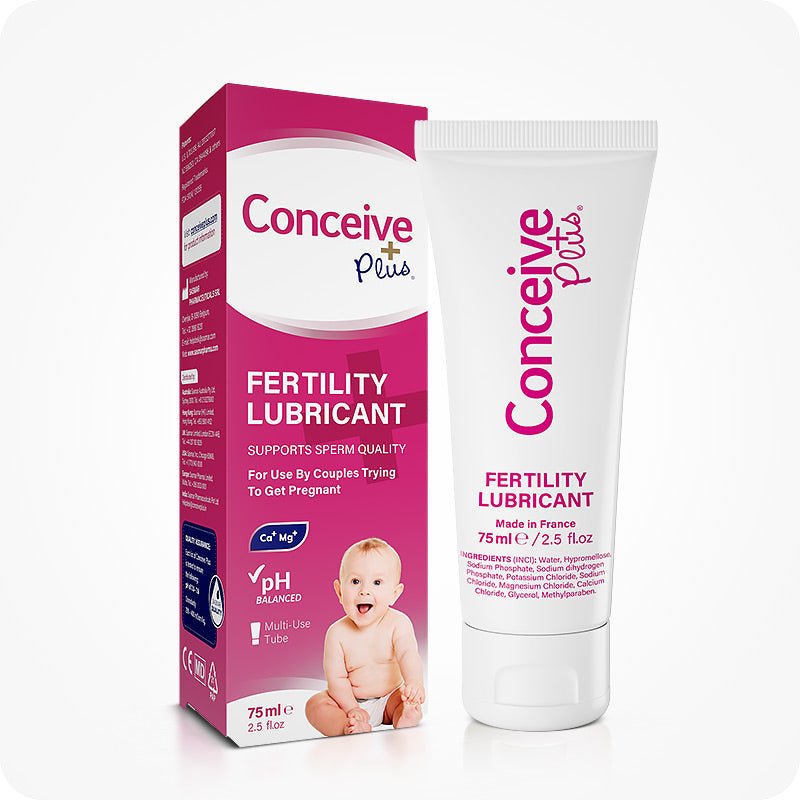
Understanding your body is the first step toward conception. Whether you are monitoring ovulation or optimising your overall fertility health, Conceive Plus products are designed to support you at every stage. Shop Conceive Plus USA for pregnancy-friendly lubricants and ovulation support.
A comprehensive female fertility evaluation typically begins with a thorough medical history and physical examination. Your doctor will ask about menstrual cycle regularity, previous pregnancies, contraceptive history, and any known medical conditions such as polycystic ovary syndrome (PCOS) or endometriosis. This initial conversation is critical — it sets the stage for which tests will be most relevant.
The cornerstone of female fertility testing is ovarian reserve assessment. This involves blood tests to measure hormones that indicate the quantity and quality of a woman remaining egg supply. The most common markers include Anti-Müllerian Hormone (AMH), Follicle-Stimulating Hormone (FSH) measured on day 3 of the cycle, and Estradiol (E2).
Beyond hormone testing, a transvaginal ultrasound is typically performed to evaluate the uterus, endometrium, and ovaries. This scan can detect fibroids, ovarian cysts, polyps, and other structural abnormalities that may affect fertility. The antral follicle count (AFC) is another important indicator of ovarian reserve.
For women over 35 or those with risk factors, additional testing may include hysterosalpingography (HSG), an X-ray procedure that checks whether the fallopian tubes are open and whether the uterine cavity has a normal shape. Tubal blockage accounts for approximately 25–30% of female infertility cases.
Male Fertility Testing: The Simple Test That Changes Everything
Male factor infertility contributes to approximately 40–50% of all infertility cases, yet it remains one of the most underdiagnosed aspects of reproductive health. The good news is that male fertility testing is straightforward, non-invasive, and remarkably informative.
The cornerstone of male fertility evaluation is the semen analysis. This simple test evaluates sperm count (normal: 15 million per mL or higher), motility (at least 40% should be motile), morphology (4% or higher normal forms), volume, pH, and fructose levels.
A single abnormal result does not confirm male infertility. Because sperm production cycles approximately every 74 days, factors like recent illness, stress, medications, or even a hot bath can temporarily affect results. Doctors typically recommend two or three analyses spaced weeks apart.
If abnormalities persist, additional testing may include hormone profiling, genetic testing, and in some cases, testicular biopsy. Identifying a male factor issue early can save months of unnecessary treatment for the female partner.
When Should You Consider Fertility Testing?
The timing of fertility testing depends primarily on age and medical history. The American Society for Reproductive Medicine (ASRM) recommends: under 35, seek testing after 12 months of trying; age 35–40, seek testing after 6 months; over 40, consider immediate testing.
Earlier testing is warranted if you have irregular or absent menstrual cycles, known conditions like PCOS or endometriosis, a history of pelvic inflammatory disease, previous chemotherapy or radiation, or a known genetic condition that could affect fertility.
Many fertility specialists now advocate for a proactive approach — why wait 12 months to discover a problem when a few simple tests can identify it in the first month?
At-Home Fertility Testing: A Growing Trend
The fertility testing market has expanded dramatically, with many at-home testing kits available for both men and women. For women, at-home tests commonly measure AMH, FSH, and sometimes TSH. For men, at-home sperm count tests can confirm whether sperm are present.
However, it is important to understand their limitations: at-home tests are screening tools, not diagnostic instruments. They cannot replace a comprehensive evaluation by a reproductive specialist. The best approach combines at-home screening with professional follow-up.
Understanding Your Results and Next Steps
Fertility test results can be overwhelming, but few results are absolute — most are indicators that guide your care team toward the most appropriate interventions. If results are normal across the board, you may be diagnosed with unexplained infertility, which affects approximately 15–30% of couples.
If specific issues are identified, targeted treatments can be pursued. Ovulation disorders can often be managed with medication. Tubal blockages may require surgical correction or IVF. Male factor issues may respond to lifestyle changes, supplements, or assisted reproductive techniques.
The purpose of fertility testing is not to deliver bad news — it is to replace uncertainty with information. And information is power.
Your Fertility Journey Deserves the Best Support
At Conceive Plus, we are dedicated to helping you understand your fertility every step of the way. From our fertility-friendly lubricants to evidence-based resources, we are here to support your path to parenthood. Explore Conceive Plus USA today.
Frequently Asked Questions About Fertility Testing
- How much does fertility testing cost? Costs vary widely. A basic female fertility workup typically ranges from £200–£500 or 00–00. Semen analysis costs £50–£150.
- Can fertility testing be done on any day of the cycle? Certain tests (FSH, estradiol, AFC) must be performed on days 2–4 of the menstrual cycle. Others (AMH, thyroid tests) can be done any day.
- Is fertility testing painful? Most tests are painless or cause minimal discomfort. Blood tests involve a simple needle stick. HSG can cause cramping similar to a menstrual period.
- Do I need a referral? This depends on your healthcare system. In many countries, you can see a gynaecologist or urologist directly.
- Can stress affect results? Acute stress can temporarily affect hormone levels and sperm parameters. Your doctor may recommend retesting after stress reduction.
- How often should testing be repeated? Ovarian reserve testing is typically done once. Semen analysis may be repeated if initial results are abnormal.
- Does a normal test guarantee pregnancy? No. Some issues may not be detectable with current testing methods.
- Should both partners be tested at the same time? Yes. Evaluating both partners simultaneously is the most efficient approach.
- Can lifestyle changes improve results? Absolutely. Weight optimisation, smoking cessation, reduced alcohol, stress management, and a healthy diet improve fertility markers.
- What is the success rate after testing? Most couples with identified issues can achieve pregnancy with appropriate treatment.