Best Folic Acid Supplement for Fertility: A 2026 Guide to Folate and Conception


The best folic acid supplement for your fertility might not be the highest-rated bottle on the shelf; it’s the one that works in harmony with your specific cycle and metabolic health. While it's a proven fact that B9 can prevent up to 70% of neural tube defects, many women feel paralyzed by confusion over MTHFR gene mutations and the debate between synthetic and natural forms. You aren't alone if you feel anxious about making the wrong choice during such a critical window.
You deserve a clear, science-backed roadmap to a healthy pregnancy. We promise to show you exactly how to choose the right form and dosage of B9 to optimize your fertility and support your body’s unique needs. This guide will replace your confusion with confidence, helping you improve your conception odds through informed supplementation.
We’ll explore the latest 2026 standards, including the impact of the Dietary Supplement Regulatory Uniformity Act and the CDC’s 400 mcg daily recommendation. You’ll also learn how recent changes like California’s corn masa fortification law affect your total intake; this ensures you have a complete picture of your nutritional requirements before you conceive.
Key Takeaways
- Start supplementing at least one month before trying to conceive to ensure your body has sufficient B9 levels during the critical first weeks of fetal development.
- Identify the best folic acid supplement for your needs by understanding the bioavailability differences between synthetic folic acid and active methylfolate.
- Aim for a daily dosage of 400mcg to 800mcg and verify your choice through third-party testing to guarantee safety from heavy metals and contaminants.
- Enhance your fertility by combining B9 with synergistic ingredients like Myo-Inositol and Vitamin D to support hormonal balance and egg health.
- Choose a prenatal specifically formulated for the conception journey to provide targeted support that standard multivitamins often miss.
Why Folic Acid is Non-Negotiable for Conception and Pregnancy
Folic acid is the synthetic, stable form of Vitamin B9 that your body relies on for its most basic biological functions. While people often discuss Folate vs. Folic Acid as if they're identical, the synthetic version is actually more bioavailable. This means your body can absorb it more easily from supplements than from food alone. This nutrient is the primary driver of DNA synthesis and cellular repair. During the rapid cell division that occurs after conception, B9 acts as the quality control manager for your future baby's genetic blueprint.
The search for the best folic acid supplement usually starts with a desire to prevent birth defects. The CDC confirms that B9 can prevent up to 70% of neural tube defects (NTDs) like spina bifida. However, timing is the most critical factor. You need to have these nutrients in your system at least one month before you conceive. Because the neural tube closes within the first 28 days of pregnancy, waiting until a missed period to start your vitamins is often too late.
To help you narrow down your choices for the best folic acid supplement, watch this breakdown of top-rated options:
Beyond Pregnancy: Folic Acid and Egg Quality
Most conversations focus on the baby, but B9 is equally important for your biological readiness. It plays a major role in oocyte (egg) maturation and quality. High folate levels in the follicular fluid are associated with better success rates during conception. Additionally, B9 helps maintain regular ovulation cycles by regulating metabolic processes. Low folate is linked to higher homocysteine levels, which may impair fertility by creating an inflammatory environment that affects egg health.
Does Your Partner Need Folic Acid Too?
Preconception health is a team effort. While often overlooked, Vitamin B9 significantly impacts sperm count and DNA integrity. Men with low folate levels often show higher rates of sperm chromosomal abnormalities. This can lead to difficulties in achieving pregnancy or increased miscarriage risks. Supplementing together ensures both partners provide the best genetic foundation. Exploring male fertility vitamins can provide the necessary B9 alongside other antioxidants that protect sperm from oxidative stress.
Folate vs. Folic Acid: Understanding the Best Form for Your Body
Vitamin B9 isn't a single substance but a family of related compounds. When you're searching for the best folic acid supplement, you'll likely encounter three main versions: food folate, folic acid, and methylfolate. Food folate is the natural form found in leafy greens and legumes, but it's highly sensitive to heat and light. Folic acid, the synthetic version, is far more stable. This stability is exactly why it's the primary form used in global fortification programs and clinical trials. Research consistently highlights the benefits of folic acid supplementation because of its proven ability to reach the bloodstream and protect developing embryos.
Your body doesn't use folic acid in its raw state. It must undergo a multi-step conversion process using enzymes to become "active." The final step in this transformation relies on an enzyme called methylenetetrahydrofolate reductase, or MTHFR. For many women, this conversion process is seamless. However, genetic variations can slow this down, making it harder for the body to access the B9 it needs for cellular repair and DNA synthesis. This is where the choice between forms becomes a personal health decision rather than a one size fits all recommendation.
What is Methylfolate (5-MTHF)?
Methylfolate is the "active" or "methylated" form of B9. It bypasses the metabolic hurdles that some bodies struggle with. 5-MTHF is the bioactive form that crosses the blood-brain barrier, making it immediately available for the body's use without needing further conversion. If you have a known MTHFR gene mutation, taking this pre-converted form ensures your cells get the support they need for a healthy pregnancy. You can find this advanced form in targeted fertility support options designed for optimized absorption.
Comparison: Which Form Should You Choose?
Choosing the best folic acid supplement depends on your genetic profile and health history. If you've undergone genetic testing and know you carry MTHFR variants, methylfolate is typically the preferred choice. For the general population without known metabolic issues, standard folic acid remains the gold standard for preventing neural tube defects due to its high absorption rate in fortified foods and tablets. It's also important to distinguish between "enriched" processed foods and whole food sources like spinach or liver; enriched foods use the synthetic form for better shelf life. If you have a history of recurrent pregnancy loss, don't rely on over the counter labels alone. Consult a fertility specialist to determine if a specific form or higher dosage is necessary for your journey.
Key Criteria for Choosing the Best Folic Acid Supplement in 2026
Finding the best folic acid supplement requires looking beyond the marketing claims on the front of the bottle. For most women in the trying to conceive (TTC) phase, the daily dosage "sweet spot" falls between 400mcg and 800mcg. While the CDC recommends a minimum baseline of 400mcg for all women of reproductive age, many fertility specialists suggest 800mcg to ensure optimal tissue saturation before pregnancy begins. It's vital to avoid the "more is better" mentality. Consuming more than the Tolerable Upper Intake Level (UL) of 1,000mcg from supplements can lead to health complications without providing additional protection against neural tube defects.
Purity and safety standards have become more rigorous with the introduction of the Dietary Supplement Regulatory Uniformity Act of 2026. This legislation seeks to establish a uniform national standard, but savvy consumers should still verify their choices. Look for brands that invest in third-party testing to ensure their products are free from heavy metals, such as lead and mercury, which can negatively impact reproductive health. Bioavailability is another major factor. High-quality supplements often feature "Quatrefolic," a fourth-generation folate that offers improved solubility and stability compared to older synthetic versions.
The Problem with Generic Multivitamins
Cheap, generic multivitamins often include unnecessary fillers, artificial colors, or common allergens like soy and gluten. These additives can trigger inflammatory responses in sensitive individuals, which is counterproductive when you're trying to optimize your body for conception. You should prioritize products that follow Good Manufacturing Practices (GMP) to ensure consistency and potency. Another hidden danger of low-quality, high-dose B9 is its ability to mask a Vitamin B12 deficiency. Excessive folic acid can correct the anemia caused by low B12 while allowing the underlying neurological damage to progress unnoticed.
Reading the Label Like a Pro
Labels in 2026 use "mcg DFE" (Dietary Folate Equivalents) to help you understand exactly how much B9 your body will actually absorb. When you evaluate the best folic acid supplement, check for synergistic co-factors like Vitamin B6 and Vitamin B12. These nutrients work together to manage homocysteine levels and support DNA methylation. To ensure you're providing your body with these nutrients during the most critical window, use an ovulation calculator to time your supplement start date. Ideally, you want these levels to be peaked and stable at least 30 days before your first predicted ovulation window of your TTC journey.
Maximizing Fertility: Combining Folic Acid with Synergistic Nutrients
B9 is essential for preventing birth defects, but it doesn't work in a vacuum. When you're searching for the best folic acid supplement, you'll find that the most effective options are often formulated as part of a targeted fertility blend. These combinations address complex nutritional gaps that single-ingredient supplements often miss. By pairing B9 with synergistic nutrients, you create a more supportive environment for conception and early fetal development. This holistic approach ensures your body isn't just surviving, but thriving during the preconception window.
Targeted fertility blends outperformed standard multivitamins in several 2025 clinical observations because they focus on the specific metabolic pathways required for healthy ovulation. Instead of a "one size fits all" pill, these formulations prioritize the co-factors that help B9 do its job more efficiently. This includes balancing hormones and ensuring the uterine environment is receptive to a developing embryo.
The Myo-Inositol and Folate Connection
Myo-inositol is a powerful partner for B9. Together, they work to improve insulin sensitivity and enhance egg quality. This is vital because high insulin levels can disrupt ovulation and damage the delicate environment where oocytes mature. This combination is particularly effective for those with PCOS. By regulating metabolic health, these two nutrients help restore regular cycles and increase the chances of successful fertilization. You can find a deeper dive into these benefits in our Myo-Inositol for Fertility: A Complete Guide, which explores how this pairing transforms hormone balance.
Vitamin D and B9: A Duo for Success
Vitamin D, often called the "fertility sunshine," plays a critical role in endometrial receptivity. This means it helps prepare the lining of the uterus for an embryo to attach successfully. When paired with the best folic acid supplement, it ensures that both the genetic material and the physical environment are ready for pregnancy. Checking your levels before TTC is a smart move since many women are unknowingly deficient. For a detailed look at why this nutrient is a non-negotiable for your journey, read our Vitamin D Supplement for Fertility guide.
Iron and iodine complete the "big three" of preconception care alongside B9. Iron is necessary for building the extra blood supply required for pregnancy, while iodine supports the baby’s brain development and your own thyroid function. A well-rounded supplement provides these in balanced amounts, preventing common deficiencies that lead to fatigue and developmental delays. Ready to give your body the comprehensive support it needs for a healthy start? Shop our fertility-first supplements to find the perfect blend for your journey.
Why Conceive Plus Prenatals Offer the Ultimate Folic Acid Support
Standard prenatal vitamins are often designed for women who are already pregnant, but the nutritional needs of someone trying to conceive are distinct. Conceive Plus fills this gap by offering what many consider the best folic acid supplement for the preconception phase. Our formula doesn't just provide a baseline dose of B9; it integrates the vitamin into a complex of minerals and antioxidants specifically chosen to support the unique metabolic demands of fertilization and early implantation. Selecting the best folic acid supplement is only the first step; the second is ensuring it's part of a regimen that supports your entire reproductive system.
Gentleness matters just as much as potency. Many women struggle with the nausea often associated with high-dose vitamins. We've designed our prenatals to be gentle on the stomach while maintaining maximum absorption. This ensures you don't have to choose between your comfort and your baby's health. Trusted by millions of couples worldwide, our products provide the foundational support needed to turn a TTC journey into a success story. Our formulas are expertly crafted to meet the 2026 standards for purity and efficacy, giving you peace of mind with every dose.
Conceive Plus Women’s Fertility Support
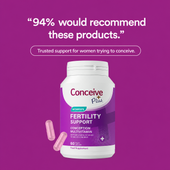
Our Women's Fertility Support capsules prioritize the synergy we've discussed throughout this guide. By combining the optimal dose of folic acid with Myo-Inositol and key vitamins, we address the root causes of cycle irregularity. This formula is the choice for women looking to regularize their cycle and prepare their body for a healthy pregnancy. You can explore our full range of Conceive Plus Fertility Products to see how our targeted approach differs from standard store-bought options.
Real Results from Real Couples
Success in the TTC journey rarely happens overnight. Consistency in your supplement routine is the key to building up the nutrient stores your body needs for a healthy conception. We encourage you to browse our Conceive Plus reviews to see how other couples have navigated their paths to parenthood. Hearing from those who have achieved their goals can provide the motivation needed to stay on track with your daily vitamins. If you're ready to take the next step, our TTC Fertility Bundles offer comprehensive support for both you and your partner. These bundles ensure you have everything required for a healthy start, from cycle tracking support to the targeted nutrients we've explored in this 2026 guide.
Empower Your Fertility Journey Starting Today
Your path to parenthood depends on the proactive steps you take during the preconception window. You now understand that timing is everything; starting B9 at least 30 days before trying to conceive is vital for your future baby's development. Whether you require standard folic acid or active methylfolate for MTHFR support, choosing the best folic acid supplement ensures your body has the genetic building blocks it needs. By combining these nutrients with partners like Myo-Inositol, you create a hormonal environment optimized for success.
Don't leave your fertility to chance. Conceive Plus products are expertly formulated by fertility professionals to support you through every stage of the TTC journey. With over 10,000 positive reviews and availability in more than 70 countries, our blends are a trusted choice for couples worldwide. Shop Conceive Plus Fertility Supplements for Optimal Preconception Support and give your body the specialized care it deserves. We're here to support you as you turn your dreams of a family into a beautiful reality.
Frequently Asked Questions
Is folic acid or folate better for fertility?
Folic acid is generally considered better for fertility due to its superior stability and the vast amount of clinical research proving its effectiveness in preventing birth defects. While folate is the natural form found in whole foods, it is less bioavailable and breaks down easily during cooking. For the general population, the synthetic form provides a more reliable way to reach the necessary blood levels required for a healthy pregnancy.
How much folic acid should I take to get pregnant?
The CDC recommends a daily intake of 400 mcg for all women of reproductive age. However, many fertility experts suggest that the best folic acid supplement for those actively trying to conceive should contain between 400 mcg and 800 mcg. This ensures your body has reached peak tissue saturation before the neural tube closes, which often happens before you even realize you are pregnant.
Can I take folic acid and myo-inositol together?
Yes, taking these two nutrients together is safe and highly beneficial for reproductive health. This combination is particularly effective for women with PCOS because it works to improve insulin sensitivity and egg quality simultaneously. By pairing them, you support both the genetic integrity of the oocyte and the hormonal balance required for regular, predictable ovulation cycles.
What happens if I have the MTHFR gene and take folic acid?
If you have an MTHFR gene variation, your body may have a reduced ability to convert synthetic folic acid into its active, usable form. This doesn't mean folic acid is toxic, but it does mean you might not be getting the full protective benefits. In this scenario, many specialists recommend using a supplement that contains methylfolate (5-MTHF) to bypass the metabolic hurdle entirely.
When is the best time of day to take my folic acid supplement?
The best time to take your supplement is whenever you are most likely to remember it consistently every day. Many women find that taking it with breakfast or dinner helps prevent any potential stomach upset. Consistency is far more important than the specific hour, as B9 levels need to remain stable in your system to provide continuous support for DNA synthesis.
Can too much folic acid be harmful during the TTC journey?
Consuming excessive amounts of B9 from supplements can be problematic if you exceed the Tolerable Upper Intake Level of 1,000 mcg per day. High doses can mask a Vitamin B12 deficiency, which may lead to permanent neurological damage if it goes undetected. It's important to choose a well balanced formula rather than "mega-dosing" in hopes of faster results.
How long does it take for folic acid to build up in my system?
It takes approximately four weeks of daily supplementation for folate levels in the blood to reach the threshold necessary to protect against neural tube defects. This is why healthcare providers urge women to start their routine at least one month before they stop using contraception. Starting early ensures your body is fully prepared from the very moment of conception.
Are there any side effects to taking the best folic acid supplements?
Most people tolerate B9 supplements very well with no noticeable side effects. A small number of women might experience mild nausea, bloating, or a bitter taste in the mouth. If you have a sensitive stomach, look for the best folic acid supplement options that are specifically formulated for preconception, as these are often designed to be gentler on the digestive system.
Trusted by Couples in Over 70 Countries
Support Male Fertility From the Inside Out
Male fertility is just as important as female fertility in the conception journey. Conceive Plus Men's range delivers targeted nutritional support to promote healthy sperm and overall reproductive wellbeing.
Shop Men's Range →