How to Track Ovulation for Pregnancy: The Complete Guide to Timing Intercourse for Conception


How to Track Ovulation for Pregnancy: The Complete Guide to Timing Intercourse for Conception
When you're trying to conceive, understanding your ovulation cycle can make all the difference. Studies show that couples who accurately identify their fertile window are significantly more likely to achieve pregnancy within the first three months of trying. Yet research from the American College of Obstetricians and Gynecologists reveals that only about 13% of women correctly identify their most fertile days. This comprehensive guide will walk you through everything you need to know about tracking ovulation, identifying your fertile window, and maximizing your chances of conception.
Whether you've just started trying to conceive or have been on this journey for a while, understanding the science behind ovulation can empower you with the knowledge to make informed decisions about your reproductive health.
Understanding Your Menstrual Cycle and Ovulation
The menstrual cycle is a finely orchestrated hormonal symphony that prepares your body for potential pregnancy each month. While the "average" cycle is often cited as 28 days, the reality is that a normal cycle can range from 21 to 35 days, and can vary from month to month even in the same woman.
Your cycle is divided into four phases:
The Menstrual Phase (Days 1–5): This is when menstruation occurs. The uterine lining sheds as hormone levels drop.
The Follicular Phase (Days 1–13): Follicle-stimulating hormone (FSH) triggers the development of follicles in the ovaries. Each follicle contains an egg, and usually one becomes dominant. Estrogen levels rise during this phase, thickening the uterine lining.
Ovulation (Day 14 in a 28-day cycle): A surge in luteinizing hormone (LH) triggers the release of a mature egg from the dominant follicle. This is ovulation — the moment the egg becomes available for fertilization. Crucially, the egg survives for only 12 to 24 hours after release.
The Luteal Phase (Days 15–28): After ovulation, the empty follicle becomes the corpus luteum, producing progesterone to prepare the uterine lining for implantation. If the egg is not fertilized, progesterone drops, menstruation begins, and the cycle restarts.
According to research published in the New England Journal of Medicine, the probability of conception from intercourse on ovulation day itself is about 33%, but intercourse two days before ovulation has a conception probability of approximately 27–33% as well. This underscores the importance of tracking not just the moment of ovulation, but the entire fertile window leading up to it.
The 5 Most Effective Methods to Track Ovulation
Recommended by Fertility Experts
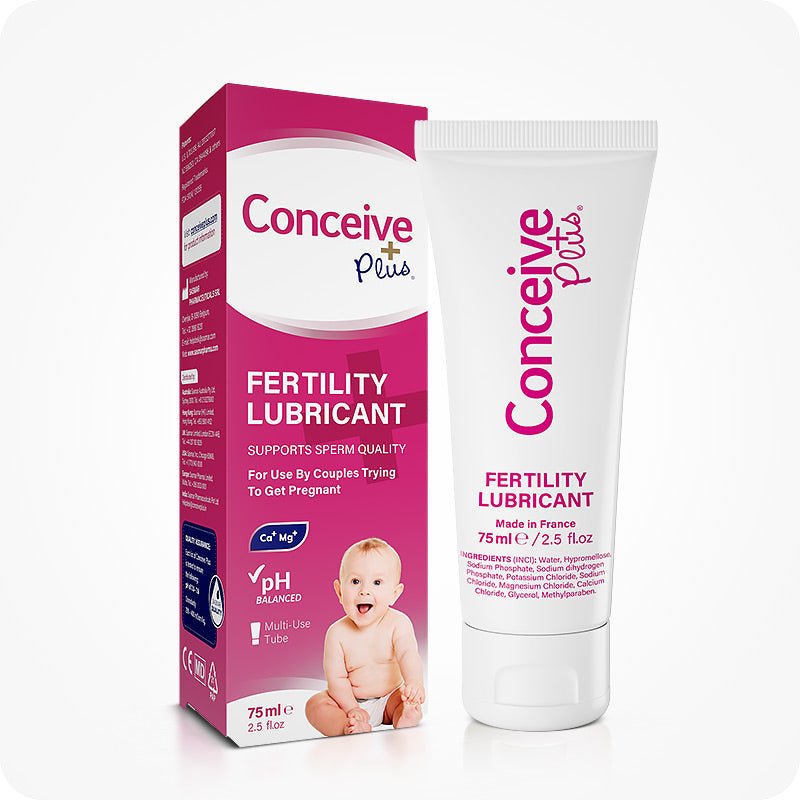
Conceive Plus Fertility Lubricant
Formulated with calcium and magnesium ions to support sperm function, Conceive Plus is the #1 fertility-friendly lubricant trusted by couples worldwide.
Shop Now →There's no single "best" method for everyone — different approaches suit different lifestyles, cycle types, and personal preferences. Here's a breakdown of the five most widely used and scientifically validated methods:
1. Ovulation Predictor Kits (OPKs)
OPKs detect the surge in LH that occurs 24–36 hours before ovulation. They're available as urine test strips or digital devices. Clinical studies show OPKs have an accuracy rate of 97–99% in detecting the LH surge when used correctly. They're widely available in pharmacies across the US and are recommended by the American Society for Reproductive Medicine (ASRM) as an effective first-line tool.
How to use: Begin testing a few days before you expect to ovulate. For a 28-day cycle, start around day 10 or 11. Test at the same time each day, ideally between 10 AM and 8 PM, and avoid heavy fluid intake beforehand.
2. Basal Body Temperature (BBT) Charting
BBT is your body's resting temperature, taken first thing in the morning before any activity. After ovulation, progesterone causes a slight but detectable rise in BBT of 0.2–0.5°F (0.1–0.3°C). By charting your BBT over several months, you can identify patterns and predict when ovulation typically occurs.
Limitation: BBT confirms that ovulation has already occurred, so it's best used in combination with other methods to predict future cycles. A study in Human Reproduction found that BBT alone correctly identified the fertile window in only 30% of cycles.
3. Cervical Mucus Monitoring
Your cervical mucus changes throughout your cycle under hormonal influence. As ovulation approaches, estrogen causes mucus to become clearer, more slippery, and stretchy — often described as resembling raw egg whites. This type of mucus is called "spinnbarkeit" and helps sperm travel through the cervix.
Effectiveness: When used consistently, the Billings Ovulation Method (which tracks cervical mucus) has been shown in peer-reviewed research to identify the fertile window with up to 93% effectiveness in motivated users.
4. Fertility Monitors
Advanced fertility monitors like Clearblue Advanced Digital track both estrogen and LH, giving you up to 6 fertile days per cycle. Some next-generation devices also track progesterone to confirm ovulation. These are more expensive but offer greater precision and are especially useful for women with irregular cycles.
5. Cycle Tracking Apps with AI
Modern fertility apps use algorithms that learn your cycle patterns over time to predict ovulation. While convenient, most are based on calendar calculations and may be less accurate for women with irregular cycles. Some premium apps now integrate with wearable devices to incorporate temperature and heart rate data for improved predictions.
Reading Your Body's Ovulation Signs
Beyond formal tracking methods, your body sends several physical signals around ovulation that are worth learning to recognize:
Mittelschmerz (Ovulation Pain): Approximately 20% of women experience a one-sided pelvic ache or twinge at ovulation, sometimes lasting from a few minutes to 48 hours. A 2015 study in the Journal of Obstetrics and Gynecology found this symptom correlates closely with the LH surge.
Breast Tenderness: Rising estrogen just before ovulation can cause heightened breast sensitivity. This is different from the tenderness experienced before menstruation.
Heightened Senses: Research from Wayne State University found that women's sense of smell and visual acuity is enhanced around ovulation — an evolutionary adaptation thought to support mate selection.
Libido Increase: Elevated estrogen and testosterone naturally increase sex drive around ovulation, which is — from an evolutionary standpoint — not a coincidence.
Cervical Position: Around ovulation, the cervix becomes softer, higher, more open, and wetter. Learning to check your cervical position through regular self-examination adds another layer of data to your tracking.
Bloating: Fluid retention associated with the LH surge can cause mild abdominal bloating just before ovulation.
The Fertile Window: Timing Intercourse Correctly
The fertile window is the period during which intercourse can result in pregnancy. Because sperm can survive in the female reproductive tract for up to 5 days (in the presence of fertile cervical mucus), and the egg survives for 12–24 hours, the theoretical fertile window spans approximately 6 days: the 5 days before ovulation and the day of ovulation itself.
However, not all days carry equal conception probability. Research published in BMJ showed the following conception probabilities by timing:
- 5 days before ovulation: ~10%
- 4 days before ovulation: ~14%
- 3 days before ovulation: ~16%
- 2 days before ovulation: ~27–33%
- 1 day before ovulation: ~30–33%
- Day of ovulation: ~33%
- 1 day after ovulation: ~0–5%
Practical recommendation: Aim to have intercourse every 1–2 days during the fertile window, particularly in the 3 days leading up to and including ovulation day. There's no evidence that daily intercourse decreases sperm quality in men with normal semen parameters.
One often-overlooked factor is lubrication. Many common sexual lubricants — including saliva — have been shown to impair sperm motility and DNA integrity. The American Society for Reproductive Medicine advises using a fertility-friendly lubricant if additional lubrication is needed. Products like Conceive Plus Fertility Lubricant are specifically formulated to match the pH and osmolality of fertile cervical mucus, making them safe to use during the fertile window.
Common Ovulation Tracking Mistakes to Avoid
Even motivated couples make errors that can undermine their tracking efforts. Here are the most common mistakes and how to avoid them:
Testing OPKs too late in the day: LH surges in the morning and is detectable in urine a few hours later. Testing in the late afternoon or evening gives the best window for detection. First morning urine is actually not ideal for OPKs (unlike pregnancy tests).
Assuming a 28-day cycle: If your cycle is 32 days, ovulation likely occurs around day 18, not day 14. Base your predictions on your own cycle history, not the average.
Stopping intercourse after a positive OPK: Many couples have sex once after a positive result, then stop. But ovulation occurs 24–36 hours after the LH surge, so continuing intercourse for 2–3 days after a positive OPK maximizes the window.
Relying on apps alone with irregular cycles: Calendar-based apps are only as accurate as your cycle regularity. If your cycle varies by more than 5–7 days month to month, apps will give poor predictions. Use OPKs or fertility monitors instead.
Ignoring partner health: Timing intercourse perfectly means little if sperm quality is poor. Male factor infertility accounts for approximately 40–50% of all infertility cases, according to the NIH. Addressing male fertility simultaneously is essential.
BBT thermometer inconsistency: You must use a basal thermometer (which measures to two decimal places), take your temperature at the same time every day before rising, and account for disruptions (illness, alcohol, travel) when interpreting your chart.
Excessive stress about tracking: While counterintuitive, stress can disrupt the hormonal signals that regulate ovulation. A 2010 study in the journal Fertility and Sterility found that elevated alpha-amylase (a biomarker of stress) was associated with a 29% reduction in the probability of conception.
Technology and Apps for Ovulation Tracking
The fertility tech space has exploded in recent years, offering increasingly sophisticated tools for tracking your cycle:
Clue: One of the most data-driven cycle tracking apps, Clue uses a large database of anonymized user data to improve its algorithm. It tracks over 30 parameters and has partnered with research institutions to validate its predictions.
Ovia Fertility: Popular in the US, Ovia allows you to log symptoms, BBT, OPK results, and intercourse timing. Its algorithm analyzes your personal data to refine predictions.
Natural Cycles: The first FDA-approved birth control app, Natural Cycles uses BBT to identify fertile and non-fertile days. It's also used by couples trying to conceive to identify their peak fertility days.
Wearable Fertility Trackers: Devices like the Oura Ring (which tracks temperature), Tempdrop, and the WHOOP band can continuously monitor temperature, providing more data points than a single morning reading. Some are integrated with fertility apps.
Connected OPK Devices: Inito and Mira are fertility monitors that connect to a smartphone app and track multiple hormones (LH, estrogen, FSH, PdG) from a single urine test. These offer laboratory-grade data at home.
The key is to choose a method that you'll actually use consistently, and where possible, to combine methods. For example, using OPKs alongside cervical mucus monitoring provides confirmation from two independent biological signals.
How Conceive Plus Supports Ovulation and Fertility
Tracking ovulation is only one piece of the fertility puzzle. Nutritional support for reproductive health is equally important, and this is where Conceive Plus products can play a meaningful role in your conception journey.
Conceive Plus Ovulation Support: Formulated with Myo-Inositol, a naturally occurring compound that has been extensively studied for its role in supporting ovarian function and regular ovulation cycles. Clinical research, including a landmark study in the European Review for Medical and Pharmacological Sciences, found that Myo-Inositol supplementation improved ovulation frequency and oocyte quality in women with irregular cycles.
Conceive Plus Women's Fertility Support: A comprehensive prenatal multivitamin containing methylfolate (the bioavailable form of folate), CoQ10, vitamin D3, zinc, and other essential nutrients that support egg quality and hormonal balance. The CDC recommends all women trying to conceive take at least 400–800 mcg of folic acid or folate daily, starting at least one month before conception.
Conceive Plus Men's Fertility Support: Because male factor plays a role in approximately half of all infertility cases, addressing sperm health simultaneously is critical. Conceive Plus Men's Fertility Support contains antioxidants including vitamin C, vitamin E, zinc, and selenium, which have been shown to reduce oxidative stress — one of the leading causes of sperm DNA damage.
Conceive Plus Fertility Lubricant: As mentioned, the timing of intercourse matters less if sperm are damaged in transit. Conceive Plus Fertility Lubricant is clinically tested to be sperm-safe, matching the pH (7.2–8.2) and osmolality of natural fertile cervical mucus.
Taking a holistic approach — combining accurate ovulation tracking with targeted nutritional support — gives you the best possible foundation for achieving pregnancy.
FAQ: Your Ovulation Tracking Questions Answered
Q: How long does ovulation last?
A: Ovulation itself — the release of the egg — occurs over a matter of minutes to hours. The egg remains viable for fertilization for 12–24 hours after release. This is why maximizing the window before ovulation (when sperm can already be present) is so important.
Q: Can I ovulate more than once per cycle?
A: Superovulation — the release of more than one egg per cycle — is possible and occurs in about 5–10% of natural cycles according to research from the University of Alberta. However, when it does occur, the second egg is usually released within 24 hours of the first, so the fertile window doesn't meaningfully extend.
Q: My OPK is always negative — what does this mean?
A: This could mean you're testing at the wrong time of day, starting too early or too late in your cycle, or that your LH surge is very brief (some women surge for only a few hours). It may also indicate anovulation (cycles without ovulation), which warrants a discussion with your healthcare provider if it persists.
Q: Can stress actually delay or prevent ovulation?
A: Yes. Significant physical or emotional stress can temporarily suppress the hypothalamic-pituitary-ovarian axis, delaying or preventing ovulation. This can explain "late" periods in months of high stress. Chronic stress may also impact luteal phase length and progesterone production.
Q: Is it possible to ovulate during your period?
A: While unusual, it is theoretically possible for women with very short cycles (e.g., 21 days) to ovulate while still experiencing late-cycle spotting or the beginning of their next period. However, true ovulation during a standard menstrual flow is extremely rare.
Q: How do I know if I have irregular ovulation?
A: Signs of irregular ovulation include cycles that vary significantly in length (more than 7 days difference), very long cycles (35+ days), very short cycles (less than 21 days), or persistent OPK negatives. Blood tests measuring FSH, LH, AMH, and progesterone (on day 21 of a 28-day cycle) can help confirm whether you're ovulating regularly.
Q: How many months should I track before seeing a doctor?
A: The general guideline from ASRM is: if you're under 35, seek evaluation after 12 months of trying without success. If you're 35–40, seek evaluation after 6 months. If you're over 40, or have known risk factors like PCOS, endometriosis, or irregular cycles, see a specialist sooner — after 3–6 months.
Q: Does the position after sex affect conception?
A: There's no strong scientific evidence that any particular sexual position significantly affects conception rates. Similarly, studies have not confirmed that lying down after intercourse improves odds, though it doesn't hurt. Sperm begin swimming immediately and can reach the fallopian tubes within minutes.
Q: Can I use a fertility lubricant with OPK testing?
A: Yes — using a fertility-friendly lubricant during intercourse does not interfere with OPK testing. OPKs test urine, not vaginal fluids, so they are unaffected. Just ensure you're using a lubricant specifically formulated to be sperm-safe, like Conceive Plus.
Q: Does age affect ovulation quality?
A: Yes. While women continue to ovulate until menopause, egg quality declines with age, particularly after age 35. This means that even if ovulation occurs regularly, the quality of the egg released may be lower, reducing fertilization and implantation rates. This is why AMH testing and early consultation with a fertility specialist is recommended for women over 35 who are trying to conceive.
Taking Control of Your Fertility Journey
Tracking ovulation is one of the most empowering steps you can take on your journey to pregnancy. By understanding your unique cycle, learning to recognize your body's signs, and combining multiple tracking methods, you dramatically improve your ability to identify your fertile window and time intercourse for maximum conception probability.
Pair accurate tracking with targeted nutritional support from trusted fertility supplements, and you're giving yourself the very best foundation. Conceive Plus offers a full range of clinically-informed fertility products designed to support you and your partner at every step — from ovulation support and multivitamins to fertility-friendly lubricants.
Visit our website to explore the complete Conceive Plus range and take the next step in your fertility journey with confidence.
This article is for informational purposes only and is not a substitute for professional medical advice. Always consult your healthcare provider regarding your specific fertility health needs.
Trusted by Couples in Over 70 Countries
Start Your Journey with Conceive Plus
Scientifically formulated to support your natural conception journey. Explore our complete range of fertility products.
Explore the Full Range →