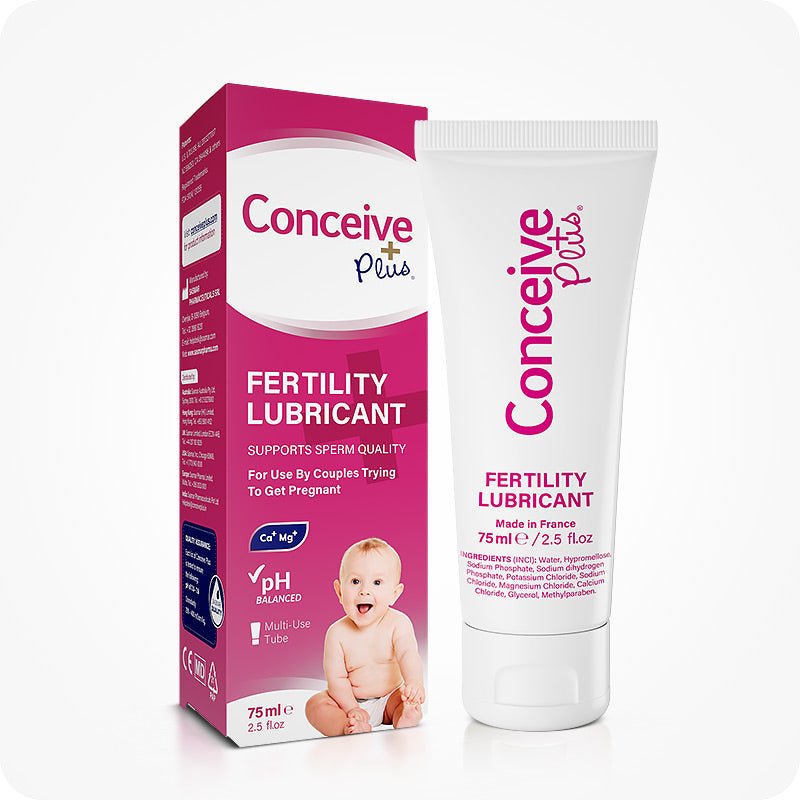
Sperm Friendly Lubricant: The Essential Guide for Trying to Conceive in 2026


The lubricant you’re using to make intimacy more comfortable might actually be the very thing standing in your way. It is a frustrating irony for many couples; while you are trying to create the perfect conditions for a baby, standard store-bought gels can inadvertently create a hostile environment for sperm. If you have been feeling anxious because conception is taking longer than expected, or if fertility medications have left you dealing with uncomfortable dryness, you aren't alone. You're simply looking for a solution that works with your body, not against it.
In this guide, you will discover why standard lubricants hinder your progress and how switching to a certified sperm friendly lubricant can support your fertility journey. We will demystify technical terms like pH balance and osmolarity, explaining why a lubricant must mimic natural fertile fluids to ensure sperm survival. You'll also learn how to identify products with the official FDA "PEB" designation. This ensures the aids you choose are clinically validated to protect sperm motility and viability as you take proactive steps toward growing your family in 2026.
Key Takeaways
- Learn why many common household lubricants act as a barrier to conception by creating a hostile environment for sperm.
- Understand the critical roles of pH balance and osmolarity in a sperm friendly lubricant and how they mimic natural fertile fluids.
- Discover how to identify high-quality products by looking for the FDA's "PEB" clearance category for fertility-safe medical devices.
- Find out the best timing and application methods to maximize your chances during your crucial six-day fertile window.
- Explore the unique benefits of using a fertility lubricant formulated with essential ions like Calcium and Magnesium to support the natural fertilization process.
Why Standard Lubricants Are a Hidden Barrier to Conception
Couples often find themselves in a frustrating cycle. They use personal lubricants to make timed intercourse more comfortable, unaware that these products might be sabotaging their efforts. It's a common hurdle. While you're trying to make things easier, most standard gels are essentially acting as a contraceptive barrier. A true sperm friendly lubricant is specifically designed to act as a bridge, not a wall. It mimics the electrolyte balance, viscosity, and pH of fertile cervical mucus, providing a safe passage for sperm to reach the egg.
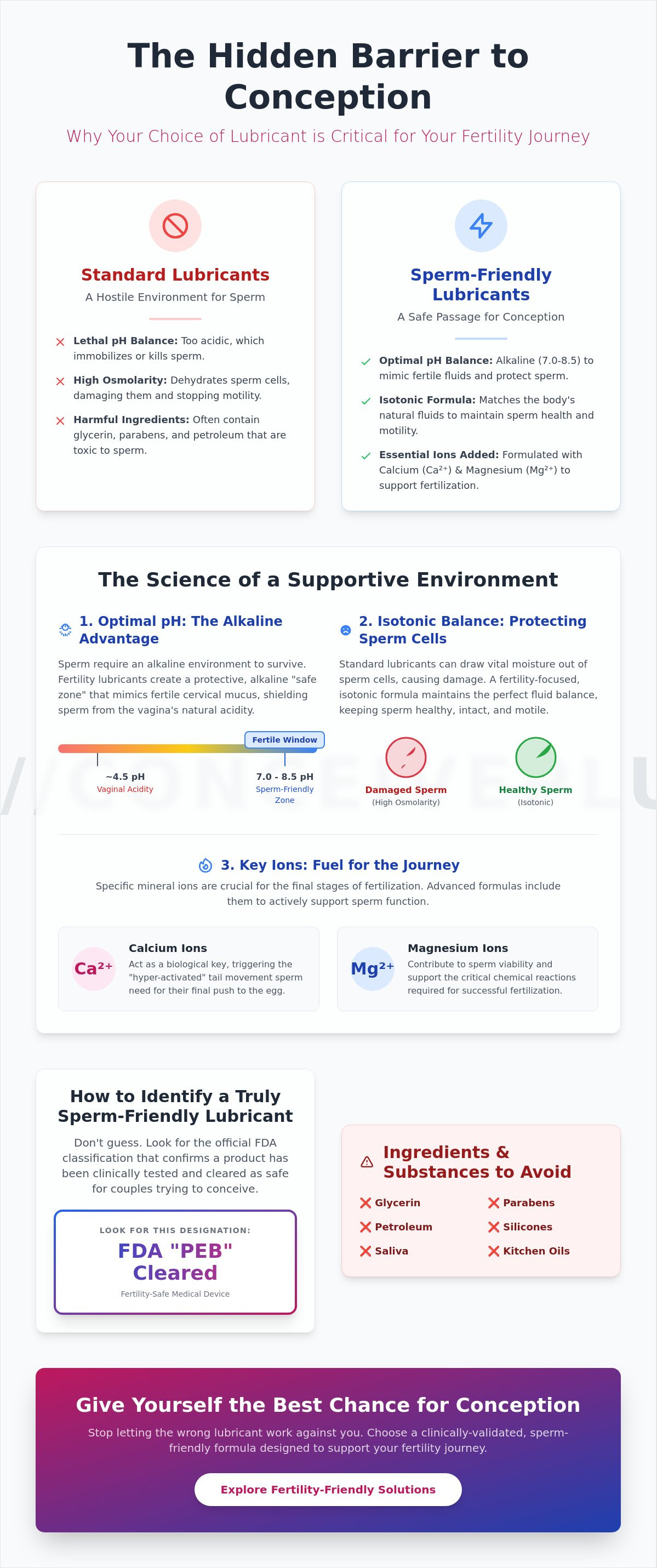
Standard lubricants are typically formulated with a low pH to match the naturally acidic environment of the vagina. This acidity is great for preventing infections, but it's lethal for sperm. Sperm require an alkaline environment to survive their journey. Most drugstore brands also have high osmolarity, which essentially draws water out of the sperm cells. This causes them to shrivel and lose motility almost instantly. Research indicates that the vast majority of standard personal lubricants significantly impair sperm motility within 60 minutes of contact, making it much harder for them to complete their mission.
The Friction vs. Fertility Dilemma
The stress of trying to conceive often leads to vaginal dryness. When you're tracking cycles and timing intimacy, the pressure can reduce natural arousal. Additionally, common fertility medications like Clomid are known to dry out cervical mucus, making lubrication a necessity rather than a luxury. However, using the wrong product creates a physical and chemical barrier. Understanding how standard lubricants impact sperm function is vital for anyone on this journey. Even "natural" options aren't always safe. Saliva contains digestive enzymes that break down sperm membranes, while heavy kitchen oils can trap sperm or contain contaminants that hinder their progress. Switching to specialized fertility products ensures you're providing the best environment for conception.
Common Ingredients That Kill Sperm
The ingredient list on a standard bottle of lube often contains hidden dangers for fertility. Glycerin is one of the most frequent offenders. It's a humectant that creates high osmotic pressure, dehydrating sperm cells. Parabens are another concern; they can act as endocrine disruptors, potentially interfering with the delicate hormonal balance required in the vaginal canal. Petroleum-based products are equally risky because they can coat the vaginal wall and alter the natural pH balance, making it impossible for sperm to swim effectively. A dedicated sperm friendly lubricant ensures these harmful additives are absent. Instead, these specialized formulas use ingredients that support sperm health and DNA integrity, giving every swimmer a better chance of reaching its destination.
The Science of Sperm-Friendly Lubricant: pH, Osmolarity, and Ions
Creating a baby requires a precise biochemical environment. While many people focus solely on timing, the chemical makeup of the vaginal environment during intercourse is just as vital. A high-quality sperm friendly lubricant does more than provide comfort; it acts as a surrogate for the body's natural fluids. To do this effectively, the formula must achieve a "sweet spot" in pH levels, specifically between 7.0 and 8.5. This alkaline range protects sperm from the naturally acidic environment of the vagina, which usually sits around a pH of 4.5 to keep infections at bay. Without this alkaline shield, sperm lose their ability to swim or die before they ever reach the cervix.
Beyond simple pH balance, the most advanced lubricants address the presence of essential electrolytes. While lab studies often highlight how harsh chemicals stop sperm in their tracks, a study on the Effect of Vaginal Lubricants on Natural Fertility suggests that using a properly formulated product supports the probability of conception in real-world scenarios. This is largely because these products don't just "stay out of the way"; they actively mimic the body's fertile cervical mucus by providing the right balance of salt and minerals.
Why Ions Matter for Motility
Sperm must undergo a process called "capacitation" to successfully fertilize an egg. This process is triggered by specific ions. Calcium (Ca2+) acts like a biological key, unlocking the hyper-activated tail movement sperm need for their final sprint toward the egg. Magnesium (Mg2+) is equally critical, as it supports the cellular energy production within the sperm head. If you want to dive deeper into these biological mechanisms, explore our detailed guide on Sperm Friendly Lubricant for Fertility: The Science of Supporting Conception in 2026. If you're looking for a solution that includes these essential minerals, you can find them in the Conceive Plus formula.
Osmolarity: The Silent Sperm Killer
Osmolarity refers to the concentration of dissolved particles in a liquid. For a lubricant to be safe for conception, it must be isotonic, meaning its salt concentration matches that of human sperm and cervical mucus. When sperm encounter a "hypertonic" lubricant with high osmolarity, the laws of physics force water out of the sperm cells to balance the concentration. High osmolarity causes sperm cells to rapidly lose volume and shrivel, which permanently damages their shape and prevents them from swimming. Using a sperm friendly lubricant ensures that the delicate balance of fluids remains stable, keeping the sperm hydrated and healthy for their journey.
How to Identify a Truly Sperm-Friendly Lubricant
Walking down the personal care aisle can be overwhelming for any couple trying to conceive. You'll see dozens of bottles claiming to be "natural" or "pH balanced," but these labels are often insufficient for fertility needs. A genuine sperm friendly lubricant must meet rigorous standards that go beyond simple comfort. The gold standard for identification is the FDA "PEB" clearance. This specific classification is reserved for personal lubricants that are clinically proven to be compatible with gametes, fertilization, and embryos. If a product doesn't carry this clearance, it hasn't undergone the specific testing required to ensure it won't hinder your chances of pregnancy.
Many products use the "spermicide-free" label as a marketing tactic. While this means the gel doesn't contain active chemicals like Nonoxynol-9, it doesn't guarantee the product is safe for sperm. As discussed in previous sections, factors like high osmolarity can kill sperm just as effectively as a chemical spermicide. Additionally, a product labeled "pH balanced" is usually balanced to the vagina’s resting acidic state. For conception, you need a formula balanced to the alkaline state of fertile cervical mucus. Choosing a water-based formula is also vital. Unlike oil or silicone-based options, water-based gels allow for easy sperm migration, ensuring the "swimmers" can move freely toward the cervix.
Clinical Markers of Quality
When evaluating options, look for brands that back their claims with published clinical studies rather than just internal laboratory tests. Clinical data provides a higher level of assurance that the product performs safely in real-world conditions. Recent research on lubricant types and fecundability highlights how the chemical composition of different lubricants can impact the time it takes to achieve a pregnancy. To ensure you're using a formula that meets these high standards, you can explore our best-selling fertility products, which are designed specifically with these clinical markers in mind.
Packaging: Tubes vs. Applicators
The delivery method of your sperm friendly lubricant can be just as important as the formula itself. Multi-use tubes are excellent for external application and general comfort. However, pre-filled internal applicators offer a distinct advantage for fertility. They allow you to deposit the lubricant deep within the vaginal vault, closer to the cervix, where it can coat the area and create a supportive environment for sperm immediately upon ejaculation. This deep delivery ensures the alkaline "bridge" is exactly where it needs to be. For more help deciding which format fits your needs, check out The Ultimate Guide to Fertility Friendly Lubricant: Choosing the Best for Your TTC Journey in 2026.
Maximizing Fertility: How and When to Use Fertility Lube
Timing is everything. Even the highest quality sperm friendly lubricant can only do its job if it's present during your most fertile moments. While choosing a safe product is the first step, using it correctly ensures you get the most out of every intimate moment during your cycle. Most couples find that a proactive approach, combining the right lubricant with precise tracking, helps reduce the stress often associated with timed intercourse. It's not just about reducing friction; it's about creating a consistent, supportive environment for sperm during the narrow window when conception is possible.
Involving both partners in the application process can also make the experience feel more like a shared journey rather than a clinical task. Many couples find that using the lubricant as part of foreplay helps maintain intimacy and reduces the "performance pressure" that often comes with trying to conceive. By making the lubricant a natural part of your routine, you ensure it's always there when it matters most.
Mastering the Fertile Window
Your fertile window typically spans six days: the five days leading up to ovulation and the day of ovulation itself. To pinpoint these days accurately, you can use an ovulation calculator to track your cycle length and estimate your peak fertility. For the best results, start using your lubricant daily during this six-day window. This is especially helpful if you're taking fertility medications that might reduce your natural arousal fluids. If you're unsure exactly when your peak begins, follow our When to Take an Ovulation Test: A Step-by-Step Timing Guide for 2026 to ensure your timing is perfect.
Best Practices for Application
For maximum effectiveness, apply your sperm friendly lubricant about 10 to 15 minutes before intercourse. This short waiting period allows the gel to coat the vaginal vault thoroughly and ensures the pH levels have stabilized before sperm are introduced. Using a combination of internal applicators and external gel provides the best experience; the applicator places the "biochemical bridge" right at the cervix, while the external gel ensures comfort for both partners. Use roughly 3 to 5 milliliters of product, as applying excessive amounts can inadvertently dilute the sperm sample and hinder its concentration near the cervix. To start supporting your journey with a clinically proven formula, try Conceive Plus today.
The Conceive Plus Advantage: More Than Just Lubrication
While many brands claim to be "safe," Conceive Plus takes a more active approach to fertility. It was developed by Harvard doctors who understood that simply "not killing" sperm isn't the same as actively supporting them. This sperm friendly lubricant was designed from the ground up to provide the optimal environment for natural conception. It doesn't just sit there; it mimics the body's own fertile fluids more closely than any other product on the market. This scientific foundation is why it has become a staple for couples worldwide.
The formula's success comes from its attention to the biological details we've discussed. As we explored in the science section, Calcium and Magnesium are vital for the fertilization process. Conceive Plus remains the only fertility lubricant formulated with these specific ions. This unique addition ensures that sperm have the minerals they need for peak motility and the final push toward the egg. It's this commitment to clinical excellence that has led thousands of couples to trust the brand with their most important journey.
The Power of Ion-Based Formulation
There's a subtle but critical difference between a product that is merely "sperm-safe" and one that is "sperm-supporting." A safe product simply avoids the toxic chemicals and high osmolarity that kill sperm. A supporting product, like this sperm friendly lubricant, actually provides the physiological environment necessary for sperm survival and migration. By including essential ions, the formula helps the sperm maintain their energy and movement. You can read Conceive Plus success stories and reviews to see how this scientific edge has helped couples overcome the barriers of dryness and pH imbalance.
A Holistic Path to Pregnancy
Conception is a multi-faceted process that involves both partners working in tandem. While the right lubricant solves the immediate problem of vaginal dryness, a complete strategy includes long-term internal preparation. Pairing your lubricant with fertility prenatal vitamins ensures your body has the nutritional foundation to support a healthy pregnancy from day one. Don't forget that male fertility is just as important; addressing sperm count and motility through targeted supplementation is a key part of any proactive fertility plan in 2026. To make this process easier, you can Shop TTC Fertility Product Bundles that combine these essential tools into one convenient kit, ensuring you have everything you need to support your path to parenthood.
Take Control of Your Conception Journey Today
Understanding the delicate science of fertility is the first step toward overcoming the hurdles of trying to conceive. You've learned how standard lubricants can create a hostile environment, but you also now have the tools to identify a truly sperm friendly lubricant that supports your body's natural requirements. By focusing on pH balance, isotonicity, and essential ions, you're no longer just reducing friction; you're building a biochemical bridge for your future family.
Conceive Plus has been a trusted partner for millions of couples in over 70 countries since 2008. Formulated by Harvard doctors and officially FDA Cleared for couples trying to conceive, it's the only option that includes the vital Calcium and Magnesium ions needed for sperm motility. When you align your intimate moments with proven clinical science, you give your journey the best possible start. Shop the Conceive Plus Fertility Lubricant Collection to Support Your Journey and take a proactive step toward your dream of parenthood. Every small adjustment you make brings you closer to your goal, and you've already taken the most important leap by getting informed.
Frequently Asked Questions
Is regular lubricant safe when trying to conceive?
No, regular lubricants are not considered safe for couples trying to conceive. Most standard store-bought gels have a low pH and high salt concentration that can damage or immobilize sperm within minutes of contact. Using a specialized sperm friendly lubricant ensures you aren't accidentally creating a chemical barrier to fertilization during your most fertile days.
Can sperm-friendly lubricant help me get pregnant faster?
While no lubricant can guarantee pregnancy, these products help by removing the "hidden barriers" created by standard gels. If you have been using regular lubricants that hinder sperm motility, switching to a fertility-safe option can improve your monthly chances. It provides a supportive environment that allows the maximum number of healthy sperm to reach the egg.
What is the difference between 'sperm-safe' and 'fertility-friendly'?
The term "sperm-safe" is often a marketing claim meaning the product lacks active spermicide, but it doesn't guarantee the product won't harm sperm. "Fertility-friendly" usually refers to products with the specific FDA PEB clearance. These have undergone rigorous clinical testing to ensure they are safe for sperm, eggs, and embryos while maintaining the correct pH and osmolarity.
Does Conceive Plus contain any spermicides or harmful chemicals?
Conceive Plus is entirely free from spermicides and harmful chemicals like parabens, glycerin, or petroleum. It's formulated to be gentle on the vaginal environment while protecting sperm health. The formula focuses on biocompatibility, ensuring it doesn't cause the osmotic stress that typically dehydrates and kills sperm cells in other common personal lubricants.
Can I use coconut oil as a sperm-friendly lubricant?
You should avoid using coconut oil as a substitute for a sperm friendly lubricant. Although it's a natural oil, it hasn't been clinically tested for its impact on sperm DNA integrity or motility. Oils can also coat the vaginal wall and create a physical film that interferes with the natural movement of sperm toward the cervix.
How do I know if I have vaginal dryness affecting my fertility?
You might have dryness if you experience physical discomfort or a "sandpaper" sensation during intimacy. Many women also notice a lack of slippery, stretchy cervical mucus around the time of ovulation. This is common when under stress or taking certain fertility medications, making a specialized lubricant a helpful tool for both comfort and conception.
Should I use the applicator or the tube version of Conceive Plus?
The choice depends on your needs, though many couples use both. Pre-filled applicators are designed for internal use, allowing you to deposit the gel deep near the cervix where it's needed most for sperm support. The multi-use tube is excellent for external application to ensure comfort for both partners during intercourse.
Is sperm-friendly lube safe to use with ovulation tests?
Yes, it's perfectly safe to use these lubricants alongside ovulation tests. They're designed to be used during your fertile window and won't interfere with the accuracy of urine-based LH or estrogen tests. You can focus on your timing and tracking without worrying that the lubricant is masking your results or affecting the test strips.