Vitamins to Help You Conceive: A Science-Backed Guide for 2026


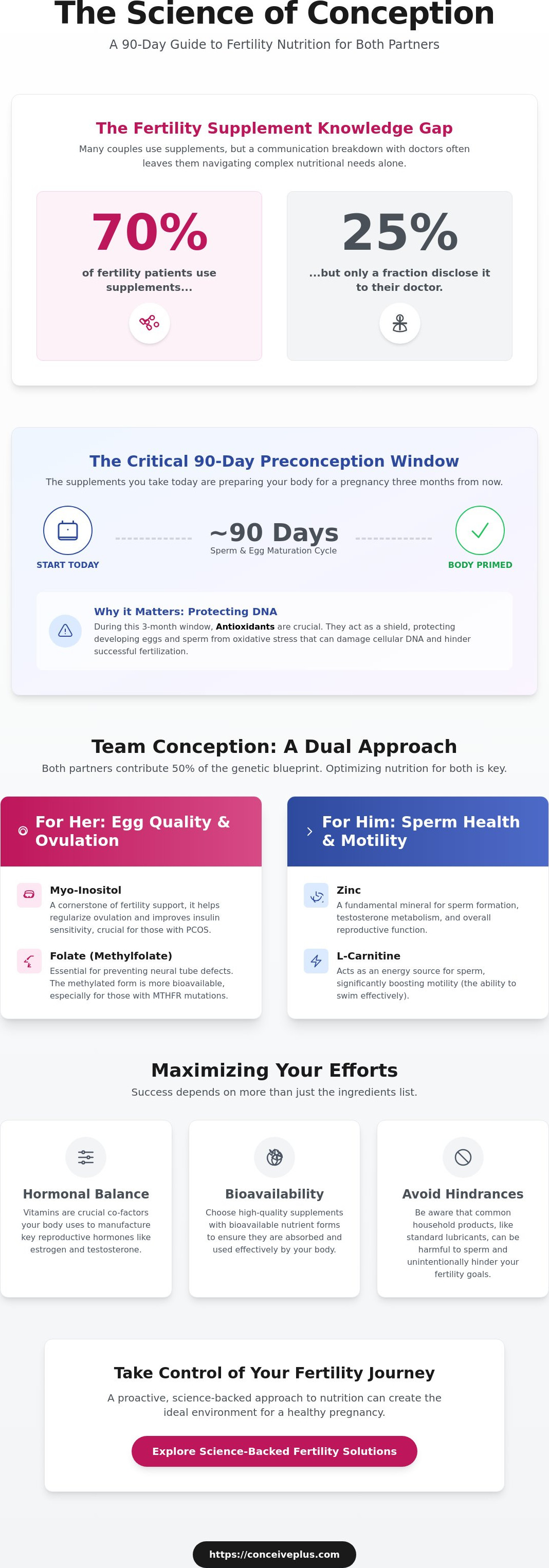
Research shows that 70% of fertility patients use supplements, yet only 25% actually disclose these choices to their doctors. This gap often stems from the noise of conflicting advice and the mounting pressure of the biological clock. You want to find the right vitamins to help you conceive, but it's hard to tell if a standard multivitamin is enough or if you need a fertility-specific formula. It's completely natural to feel confused when the stakes for your future family feel so high.
This guide cuts through the clutter to identify the essential micronutrients both partners need to optimize their reproductive health. We'll explain why conception is a biological team sport and how to prepare your body during the critical 90-day window before pregnancy. You will learn about the latest 2026 regulatory standards, the debate between folic acid and methylated folate, and the specific nutrients that support sperm and egg quality. By the end, you'll have a clear, science-backed roadmap to help you take control and create the ideal environment for a healthy pregnancy.
Key Takeaways
- Start your preparation early by understanding why the 90-day window is critical for both partners to prime their bodies for successful conception.
- Pinpoint the difference between standard prenatal vitamins and targeted nutrients like myo-inositol that specifically support ovulation and egg quality.
- Discover the most effective vitamins to help you conceive from a male perspective, focusing on how zinc and L-carnitine boost sperm motility and energy.
- Master the timing and absorption of your supplements to ensure you're getting the full biological benefit from every dose you take.
- Learn how to protect your progress by identifying common household products, like standard lubricants, that might unintentionally hinder your fertility goals.
The Science of Micronutrients: Why Vitamins to Help You Conceive Matter
Fertility vitamins act as the primary building blocks for reproductive success. These aren't just generic health boosters; they are specific micronutrients designed to protect and fuel cellular health within the reproductive system. While many people believe prenatal vitamins are only necessary after a positive pregnancy test, the latest research suggests that using targeted vitamins to help you conceive well before that point is a game changer.
Modern diets often struggle to provide the therapeutic doses of nutrients required for optimal fertility. Soil depletion and the prevalence of processed foods mean that even a balanced diet can leave gaps in essential minerals like zinc or selenium. This reality makes a "Team Conception" approach necessary. Since both partners contribute half of the genetic blueprint, both must address their nutritional deficiencies to create the best possible environment for a healthy pregnancy.
To better understand the connection between nutrition and fertility, watch this helpful overview:
The 90-Day Maturation Cycle
It's a common misconception that eggs and sperm are ready for use immediately. In reality, they undergo a rigorous maturation process that takes approximately three months. This 90-day window is known as preconception priming. The vitamins you start taking today won't fully impact your fertility until about 90 days from now. During this time, antioxidants are especially critical. They act as a shield, protecting developing gametes from oxidative stress that can damage cellular DNA and hinder successful fertilization.
Hormonal Balance and Nutrient Synergy
Vitamins function as essential co-factors that your body uses to manufacture hormones like estrogen, progesterone, and testosterone. While a standard daily multivitamin offers a baseline for general health, targeted fertility supplements provide specific doses designed to support these hormonal pathways. Success depends heavily on bioavailability. Bioavailability is the degree and rate at which a nutrient is absorbed into the bloodstream and becomes available at the intended site of action. High-quality fertility bundles focus on these bioavailable forms to ensure your reproductive system gets exactly what it needs.
Essential Vitamins for Women: Supporting Ovulation and Egg Quality
While the 90-day window is a shared journey, women face unique biological demands when preparing for pregnancy. Choosing the right vitamins to help you conceive involves more than just picking up a standard prenatal. You need specific nutrients that support the delicate process of ovulation and ensure egg quality remains high, particularly as maternal age increases. These targeted micronutrients work at the cellular level to prepare your body for the physical demands of early pregnancy.
Folic acid remains the essential standard for preventing neural tube defects. However, many women now look for folate or methylfolate. This is especially true for those with the MTHFR gene mutation, which affects how the body processes B-vitamins. Alongside folate, Myo-Inositol has become a cornerstone of fertility support. It helps improve insulin sensitivity and can regularize ovulation, making it a vital tool for women managing PCOS. Key benefits include:
- Improved insulin signaling within the ovaries
- Better hormonal balance between LH and FSH
- Increased frequency of regular ovulation cycles
The Power of Myo-Inositol and Folate
These two nutrients work in synergy to create a better environment for egg development. When taken together, they support cycle regularity and hormonal balance. If you're looking for these specific ingredients, you can find them in targeted fertility support bundles. This combination is particularly effective because it addresses both the cellular energy required for egg maturation and the genetic stability needed for successful cell division during the first weeks of life.
Antioxidants and Egg Aging
Egg quality naturally declines over time, but you can slow the impact of environmental stressors. CoQ10, specifically in its ubiquinone form, acts like a battery for your egg cells. It provides the high levels of energy required for the egg to undergo fertilization and the initial stages of embryo development. Vitamin D3 also plays a crucial role as a pro-hormone, supporting ovarian reserve and making the uterine lining more receptive to implantation.
To protect these developing eggs from oxidative damage, antioxidants like Vitamin E and Selenium are indispensable. While you focus on these female-centric nutrients, don't forget that conception is a shared responsibility. Your partner should also consider vitamins to optimize sperm health to ensure you're both at your biological peak. Using high-quality fertility prenatal vitamins ensures you aren't missing these critical components. If you're ready to start your journey, explore how Conceive Plus can support your reproductive health.
Men Matter Too: The Best Vitamins to Optimize Sperm Health
Male fertility often takes a backseat in public discussions. This is a mistake. Since the paternal side accounts for 50% of the biological equation, sperm health is just as vital as egg quality. Sperm health isn't just about "showing up." It requires a complex balance of micronutrients to ensure the genetic material is protected and the sperm are physically capable of reaching their destination. When you search for vitamins to help you conceive, it's vital to include your partner in the daily regimen. Research shows that semen parameters can improve significantly with the right nutritional support.
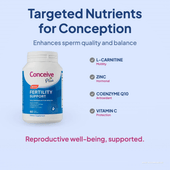
Zinc is the most critical mineral for male reproductive health. It supports stable testosterone production and plays a protective role during ejaculation. It shields sperm from environmental damage. Without enough zinc, sperm count and quality often plummet. You can find more details on how these minerals work in this comprehensive guide to preconception nutrition. This resource highlights how nutritional status directly influences the success of your conception journey.
Improving Sperm Motility and Count
Sperm motility, or the ability to swim effectively, is just as important as the total count. A high count is useless if the sperm cannot navigate the female reproductive tract to reach the egg. L-Carnitine acts as a vital fuel source that provides the energy sperm need to travel through the female reproductive tract. This amino acid derivative concentrates in the epididymis where sperm mature and gain their "swimming" ability. When combined with selenium, which ensures proper sperm morphology (shape and structure), these nutrients create a more efficient and capable team of swimmers.
Protecting Paternal DNA
One of the most overlooked aspects of male fertility is DNA fragmentation. This occurs when the genetic material inside the sperm is damaged by oxidative stress. High levels of DNA fragmentation are linked to lower fertilization rates and an increased risk of early pregnancy loss. A powerful antioxidant duo of Vitamin C and Vitamin E helps neutralize the free radicals that cause this damage. These are essential vitamins to help you conceive because they protect the integrity of the paternal genetic code during the early stages of development.
Because the sperm maturation cycle takes roughly three months, a 90-day course of specialized fertility vitamins for men can make a measurable difference. This timeline allows the body to produce a new generation of sperm under optimal nutritional conditions. Consistency during this period is the best way to ensure that the paternal contribution to the pregnancy is as healthy as possible.
Maximizing Efficacy: How to Choose and Take Your Fertility Supplements
Finding the right vitamins to help you conceive is only the first step. To get the most out of your investment, you must focus on how your body absorbs these nutrients. Consistency is your most powerful tool. Taking your supplements at the same time each day helps maintain stable micronutrient levels in your bloodstream. This stability is vital for supporting the delicate hormonal shifts that occur throughout your cycle. When blood levels fluctuate wildly, your reproductive system doesn't receive the steady support it needs for optimal function.
Absorption often depends on what else is in your stomach. Many essential fertility nutrients, including vitamins A, D, E, and K, are fat-soluble. This means they require a small amount of dietary fat to be properly processed by your digestive system. If you take these on an empty stomach, you might only absorb a fraction of the dose. Safety also plays a major role in your selection process. You should avoid excessive amounts of preformed Vitamin A, also known as retinol, during the preconception phase. High levels can be harmful to a developing embryo, so it's best to stick to formulas specifically designed for those trying to conceive (TTC).
Absorption and Timing
Pair your vitamins with a meal that includes healthy fats like avocado, eggs, or nuts. Timing also matters when it comes to mineral competition. Iron and calcium, for instance, often compete for the same absorption pathways in the gut. If your regimen includes both, try to take them at least two hours apart. Hydration is another overlooked factor. Water is the primary transport mechanism that carries these nutrients from your digestive tract to your reproductive tissues. Drink plenty of fluids throughout the day to ensure your system stays efficient.
Avoiding 'Supplement Overload'
It's easy to fall into the trap of taking too many different pills. Reading labels carefully ensures you aren't accidentally doubling up on ingredients, which can lead to toxicity over time. This is why many couples prefer TTC fertility product bundles. These kits are professionally formulated to provide a synchronized protocol for both partners, eliminating the guesswork and the risk of ingredient overlap. If you have pre-existing health conditions or have been trying for more than twelve months, consult your healthcare provider to refine your strategy. Ready to take the next step? Explore our science-backed fertility solutions to find the perfect match for your journey.
Beyond Vitamins: Creating a Complete Fertility-Friendly Environment
Preparing your body with high-quality vitamins to help you conceive is an essential first step. It builds the internal nutritional foundation needed for healthy eggs and sperm. But even the best cells can't result in a pregnancy if the external environment isn't supportive. This is where an "Internal + External" strategy becomes vital. While vitamins optimize cellular health, your daily habits and the tools you use during your fertile window determine if those cells ever meet. Creating a holistic environment means looking at how your lifestyle and bedroom products impact your success rate.
Lifestyle factors play a supporting role that shouldn't be ignored. Chronic stress triggers cortisol. High cortisol levels can disrupt the delicate hormonal balance required for regular ovulation by interfering with the hypothalamic-pituitary-ovarian axis. It's not just about "relaxing"; it's about physiological regulation. Aim for seven to nine hours of quality sleep to regulate melatonin and growth hormones. Moderate exercise, like brisk walking or swimming, improves blood flow to the reproductive organs without putting excessive strain on the body. These habits complement your vitamin regimen by ensuring your body isn't in a "fight or flight" mode when you're trying to conceive.
The Role of Fertility-Friendly Lubricant
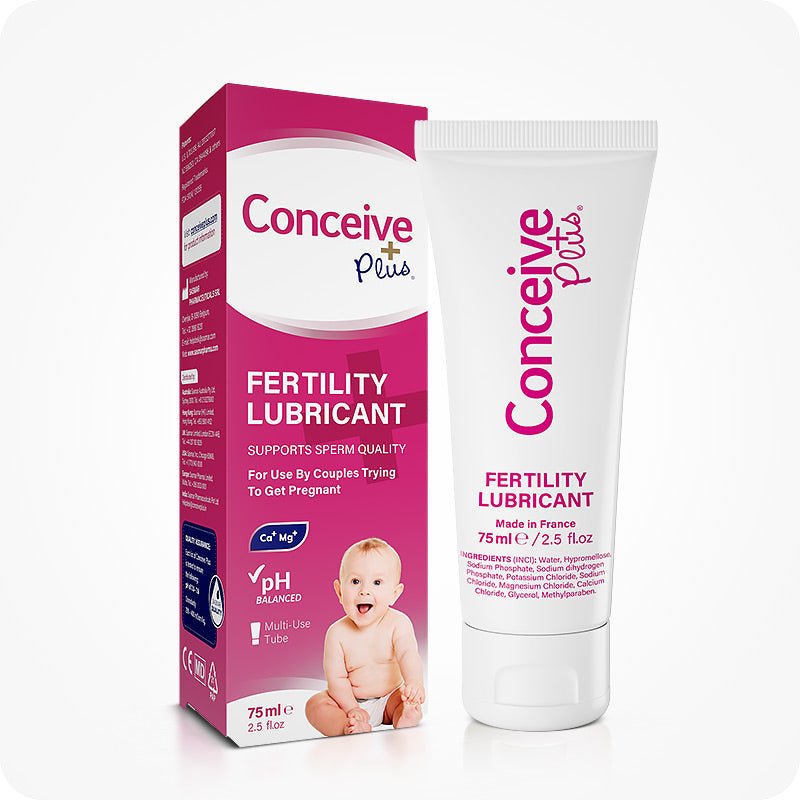
Many couples don't realize that standard lubricants can actually hinder their progress. Most over-the-counter options have a low pH and high salt concentration. This makes them effectively spermicidal. They create a hostile barrier that stops sperm from reaching the cervix. Choosing a Sperm Safe Lubricant is a critical "last mile" step in your journey. These products are pH-balanced to mimic natural fertile cervical mucus. They provide a safe environment that helps sperm survive and swim toward the egg, ensuring the internal health gains from your vitamins aren't lost at the final stage.
Tracking and Timing Your Journey
Timing is the final piece of the puzzle. Even with the best vitamins to help you conceive, intercourse must happen during your peak fertile window. While sperm can live inside the female reproductive tract for up to five days, the egg is only viable for about 12 to 24 hours after release. This creates a very specific window for success. Identifying your LH surge through consistent tracking helps you pinpoint this exact moment. Using an ovulation calculator alongside your supplement routine ensures you don't miss these critical days. To see how other couples have successfully integrated these tools, you can explore Conceive Plus Reviews and learn from their success stories.
Take the Next Step Toward Your Growing Family
Your journey toward parenthood is a biological marathon, not a sprint. By focusing on the 90-day maturation window for both eggs and sperm, you've already taken a massive step toward optimizing your reproductive health. You now understand that the right vitamins to help you conceive aren't just about general wellness; they're about creating the specific cellular environment required for a healthy pregnancy. Success comes from combining high-quality internal nutrition with external tools like tracking and pH-balanced lubricants to ensure every part of the process is aligned.
Conceive Plus provides doctor-recommended formulas that are scientifically developed for both men and women. Trusted by millions of couples worldwide since 2008, our products bridge the nutritional gaps that modern diets often leave behind. You don't have to navigate this path alone or settle for generic solutions that weren't designed for your specific needs. Shop the complete Conceive Plus Fertility Support range to start your journey today. You have the knowledge and the tools to take control of your reproductive future. We're here to support you every step of the way as you build your family.
Frequently Asked Questions
How long should I take vitamins before trying to conceive?
You should ideally start taking vitamins at least 90 days before you begin trying to conceive. This three-month lead time allows for the full maturation cycle of both eggs and sperm. Using vitamins to help you conceive during this window ensures that the gametes released have been supported by optimal nutrient levels throughout their entire development, providing a stronger foundation for fertilization.
Can vitamins alone fix infertility issues?
Vitamins cannot fix structural or genetic infertility issues, such as blocked fallopian tubes or severe hormonal imbalances. They are designed to optimize the cellular environment and support reproductive health rather than cure underlying medical conditions. If you haven't conceived after a year of trying, or six months if you're over 35, it's best to consult a fertility specialist alongside your supplement routine.
Do men really need to take fertility vitamins too?
Men absolutely need targeted nutritional support because they provide half of the genetic material for a pregnancy. Sperm quality and motility are highly sensitive to oxidative stress and nutrient deficiencies. Taking specific vitamins to help you conceive ensures that paternal DNA is protected and that sperm have the energy required to reach the egg. This shared approach significantly improves the chances of a healthy pregnancy.
Is it possible to take too many fertility supplements?
Yes, it's possible to exceed safe limits, which can lead to nutrient toxicity or interference with other medications. High doses of fat-soluble vitamins like Vitamin A can be harmful during the preconception phase. You should always check labels to ensure you aren't doubling up on ingredients across multiple products. Stick to a single, comprehensive formula or a pre-designed bundle to keep your intake within safe ranges.
Will taking prenatal vitamins help me get pregnant faster?
Prenatal vitamins help create the ideal conditions for conception, which may reduce the time it takes to get pregnant for some couples. By addressing nutritional gaps and supporting regular ovulation, these supplements ensure your body is biologically ready when the fertile window opens. While they don't guarantee an immediate result, they remove nutritional barriers that might otherwise delay a successful pregnancy and healthy implantation.
What is the difference between folic acid and folate in fertility supplements?
Folic acid is the synthetic version of Vitamin B9, while folate is the form found naturally in foods. Many modern fertility supplements use methylfolate because it's the bioactive form that the body can use immediately. This is particularly important for individuals with the MTHFR gene variant, who struggle to convert standard folic acid into its active state for proper cell division and neural tube protection.
Should I stop taking my regular multivitamin if I start a fertility-specific one?
You should generally stop taking a standard multivitamin once you transition to a fertility-specific formula. Fertility supplements are typically more potent and contain higher doses of key nutrients like folic acid and zinc tailored for reproductive health. Continuing both could lead to an excessive intake of certain minerals. Always compare the labels to ensure your new regimen covers all your nutritional needs without creating an unsafe overlap.
Can I take fertility vitamins while undergoing IVF or IUI?
Most patients can take fertility vitamins during IVF or IUI, but you must disclose all supplements to your fertility clinic first. Some ingredients can interfere with hormone medications or blood test results. Many specialists now recommend IVF-specific formulations that avoid high-dose biotin or certain herbal compounds that might disrupt the controlled environment of an assisted reproductive cycle. Professional guidance ensures your supplements support your treatment plan.